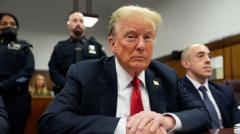
Justice Juan Merchan confirmed that Donald Trump will face sentencing this Friday for his conviction on 34 felony counts related to falsifying business records. Despite Trump's claims that the prosecution is politically motivated and flawed, the judge ruled that his arguments largely repeat what has already been addressed, thus maintaining the case timeline.
Trump's original charges stem from claims he attempted to cover up a $130,000 payment to an adult film actress by labeling it as legal fees. Although he pleaded not guilty, the legal consequences have unfolded rapidly since a jury found him guilty earlier this year, marking the first time a former president has been convicted of a crime. Justice Merchan has allowed the sentencing to occur before Trump's inauguration, indicating he will not impose any prison sentence but may issue an "unconditional discharge", meaning no probation or fines.
As Trump's legal team seeks to dismiss the case and has requested appellate hearings, the Manhattan district attorney's office counter-argued that delaying the sentencing would not benefit Trump. The looming question remains whether Trump will appear in court for the hearing, especially given previous references to possibly attending virtually.
While Bragg's office initially suggested they would not oppose a delay in sentencing, they changed course to push for resolution in light of concerns that prolonged legal battles may hinder judicial efficiency. Justice Merchan underscored the necessity for finality in this case while acknowledging that Trump retains the right to pursue all available appeals.
As the situation continues to unfold, Trump's representatives maintain that the prosecution exemplifies a misuse of judicial power against him as he prepares for another presidential campaign.
The legal landscape surrounding this case remains dynamic as Trump's team navigates these significant developments.
Trump's original charges stem from claims he attempted to cover up a $130,000 payment to an adult film actress by labeling it as legal fees. Although he pleaded not guilty, the legal consequences have unfolded rapidly since a jury found him guilty earlier this year, marking the first time a former president has been convicted of a crime. Justice Merchan has allowed the sentencing to occur before Trump's inauguration, indicating he will not impose any prison sentence but may issue an "unconditional discharge", meaning no probation or fines.
As Trump's legal team seeks to dismiss the case and has requested appellate hearings, the Manhattan district attorney's office counter-argued that delaying the sentencing would not benefit Trump. The looming question remains whether Trump will appear in court for the hearing, especially given previous references to possibly attending virtually.
While Bragg's office initially suggested they would not oppose a delay in sentencing, they changed course to push for resolution in light of concerns that prolonged legal battles may hinder judicial efficiency. Justice Merchan underscored the necessity for finality in this case while acknowledging that Trump retains the right to pursue all available appeals.
As the situation continues to unfold, Trump's representatives maintain that the prosecution exemplifies a misuse of judicial power against him as he prepares for another presidential campaign.
The legal landscape surrounding this case remains dynamic as Trump's team navigates these significant developments.