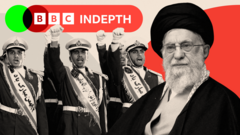
Following his nearly two-week absence in a secret bunker amid escalating conflict with Israel, Iran’s Supreme Leader, Ayatollah Ali Khamenei, 86, may consider coming out as a volatile ceasefire emerges—brokered by US President Trump and Qatar's Emir. Fearing assassination attempts from Israel, Khamenei has remained unreachable by even the highest government officials.
Should he decide to make a public appearance, he will encounter a nation altered by warfare, characterized by destruction and loss. While he will likely continue to project an image of triumph on state media, the realities on the ground present pertinent challenges—his once solid image now tarnished by a crippled military and dissenting voices among the populace.
The ongoing war has seen Israel gain dominance over Iranian airspace, significantly damaging military infrastructure and leading to the deaths of high-ranking Revolutionary Guard commanders. Many citizens are beginning to question the regime’s choices that have led to ruin, with calls for accountability emerging against Khamenei, who has led Iran since 1989. Public sentiment is resonating with disillusionment; the pursuit of nuclear weapons, perceived as a path to invincibility, has failed to protect the nation from the current onslaught and has deepened economic despair.
As Iran's already strained resources are drained further, experts like Professor Lina Khatib at Harvard University warn that the regime may be approaching its end. Simultaneously, calls for leadership change from within the clerical ranks are being echoed amidst growing dissent among ordinary citizens. Despite Khamenei's iron grip on power, dissatisfaction is bubbling up even from previously loyal factions.
In recent weeks, solidarity among Iranians has risen in the face of adversity, contrasting their disdain for the regime with their desire to protect their homeland. Nevertheless, many also harbor wariness regarding potential foreign influence in any outcomes for regime change. With opposition figures either incarcerated or exiled, the ability for any organized revolt remains tenuous; the tribes of unrest signal a chaotic aftermath rather than a cohesive shift in leadership.
Meanwhile, fears persist regarding increased governmental suppression. Following harsher crackdowns, including recent executions of accused spies, apprehension is mounting as the regime’s anger within may turn toward its own citizens instead of external enemies.
As resistance builds quietly within, the Iranian government’s burgeoning authoritarian measures might only suppress dissent temporarily, with analysts predicting that any significant uprising may emerge slowly, potentially long after the war. However, the ongoing conflict raises pressing questions regarding the nation’s fate.
Significantly, the war has not entirely dismantled Iran's potential military capabilities; ballistic missile silos remain undestroyed, instigating concern for continued threats regionally. Moreover, while the regime conveys a tight hold over its nuclear ambitions, strategic modifications and a nascent secret nuclear facility hint at Khamenei's hesitancy to abandon aspirations for nuclear development.
In his twilight years, Khamenei faces not only the survival of a battered regime but also the reality of his imminent mortality. He must contemplate a succession plan that could ensure the continuity of clerical power amidst the state’s strife.
Iran is embroiled in an uncertain future as it grapples with newfound levels of dissent, weakened resolve, and the staunch presence of prior ambitions in a rapidly shifting geopolitical landscape.