In the wake of escalating trade tensions and China’s recent restrictions on seven rare earth elements, Australian Prime Minister Anthony Albanese has declared a commitment to invest A$1.2 billion (£580 million) in a strategic reserve for critical minerals if he secures electoral victory next month. These rare earths, essential for cutting-edge technology such as electric vehicles and advanced weaponry, are currently dominated by China, which holds significant control over the refining process globally.
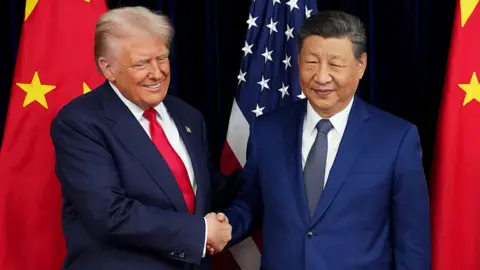
These export restrictions from Beijing have been perceived as a riposte to tariffs enacted under former US President Donald Trump, amplifying concerns not only in the United States but also among its allies. As reported, around 75% of the US’s rare earth imports were sourced from China between 2019 and 2022, heightening U.S. vulnerability in terms of defense and technological advancements. Analysts express that the western world overlooked the growing monopoly China had established in the refinement of these vital elements.
Given this backdrop, Albanese’s proposal intends to prioritize critical minerals vital to Australia's national security and that of allied nations. While Australia boasts reserves of these minerals, the reality remains that approximately 90% of their processing occurs within Chinese borders, making the immediate impact of Australia's strategic reserve questionable, according to experts like Philip Kirchlechner.
Elon Musk of Tesla recently highlighted that the export halts from China are already affecting the development of advanced technologies at his company, indicating the broader ramifications for the tech industry. Albanese's initiative, however, goes beyond mere stockpiling — it seeks to create a framework where Australia can furnish both its local industries and international partners with critical resources.
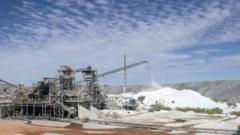
Efforts to refine these minerals domestically are part of Australia's broader "Future Made in Australia" plan aimed at enhancing economic independence and capitalizing on its rich mineral resources. Investments like the A$840 million funding for the Arafura Rare Earths project may signal a shift towards establishing local production capabilities, yet experts warn that full independence from Chinese refinement may remain elusive until at least 2026.
With geopolitical dynamics in flux, responses from both the US and China are expected as Australia intensifies its strategic positioning. China, through its diplomatic channels, has called on Australia to cultivate closer ties, yet Albanese remains resolute in prioritizing his nation’s interests.
Ultimately, analysts assert that while Australia’s proposal marks a significant step in diversifying critical mineral supply chains, the substantial control China maintains over the refinement processes raises concerns about the efficacy of Australia's plan in the face of global trade tensions.