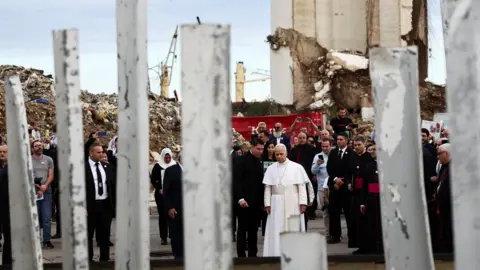
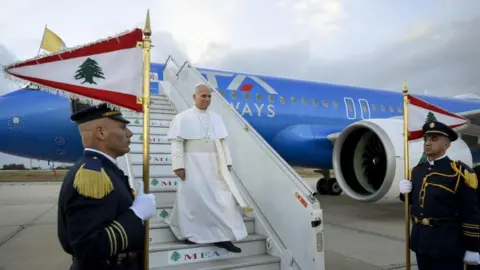
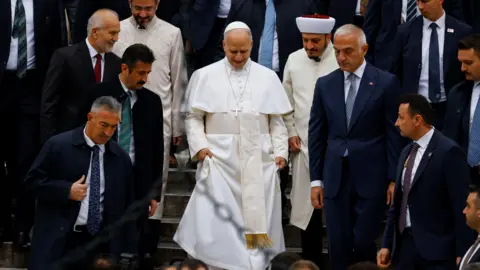
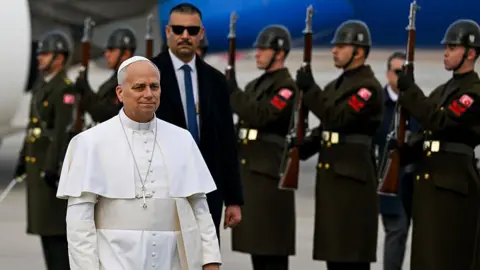
In a poignant first homily delivered in the Sistine Chapel, Pope Leo XIV, the newly elected pontiff, took a definitive stance for "ordinary people," promising to uplift their voices as he leads the Roman Catholic Church into a new era. Born Robert Francis Prevost in Chicago, Leo XIV, the first American-born pope, signaled a focus on grassroots support amidst global complexities facing the institution.
As he addressed the solemn assembly of cardinals present for the Mass, held shortly after his election, he openly called for "missionary outreach" as vital to reconnecting a waning faith that he attributed to "appalling violations of human dignity" across the globe. Echoing the teachings of his predecessor, Pope Francis, he urged the church to build bridges to its communities while highlighting the pressing need for pastoral care.
In a landscape reflected by significant ideological divisions among clergy, particularly between progressive and conservative factions, Leo XIV’s emphasis on confronting societal challenges suggests a commitment to continuing reform efforts started under Pope Francis. However, uncertainty surrounds his approach to pivotal issues, such as the role of women in the church, the acceptance of LGBTQ+ members, and the accountability of priests amid abuse scandals, as well as the greater question of who should direct the church's future.
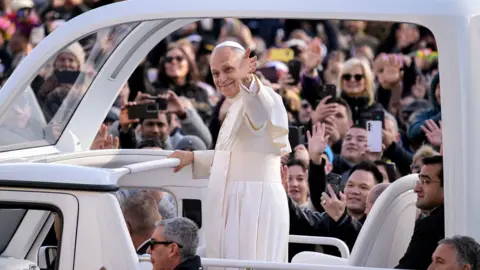
As preparations for his public addresses continue, the new pope will engage directly with the faithful in a scheduled appearance where he will recite the Regina Coeli prayer, initiating a new chapter not just for himself but for the papacy at large. Through his election, Leo XIV holds the potential to reshape global perceptions of the church and reaffirm its role in advocating for marginalized communities, contributing to discussions crucial to its relevance in contemporary society.
While Leo XIV’s American roots enhance his profile, his extensive service in Peru as a bishop offers a unique perspective to address the needs of various communities worldwide, positioning him as a unifying figure at a time when the church grapples with internal and external pressures.
As he addressed the solemn assembly of cardinals present for the Mass, held shortly after his election, he openly called for "missionary outreach" as vital to reconnecting a waning faith that he attributed to "appalling violations of human dignity" across the globe. Echoing the teachings of his predecessor, Pope Francis, he urged the church to build bridges to its communities while highlighting the pressing need for pastoral care.
In a landscape reflected by significant ideological divisions among clergy, particularly between progressive and conservative factions, Leo XIV’s emphasis on confronting societal challenges suggests a commitment to continuing reform efforts started under Pope Francis. However, uncertainty surrounds his approach to pivotal issues, such as the role of women in the church, the acceptance of LGBTQ+ members, and the accountability of priests amid abuse scandals, as well as the greater question of who should direct the church's future.
As preparations for his public addresses continue, the new pope will engage directly with the faithful in a scheduled appearance where he will recite the Regina Coeli prayer, initiating a new chapter not just for himself but for the papacy at large. Through his election, Leo XIV holds the potential to reshape global perceptions of the church and reaffirm its role in advocating for marginalized communities, contributing to discussions crucial to its relevance in contemporary society.
While Leo XIV’s American roots enhance his profile, his extensive service in Peru as a bishop offers a unique perspective to address the needs of various communities worldwide, positioning him as a unifying figure at a time when the church grapples with internal and external pressures.