In brief
Experts and campaigners are debating the best course of action for the orcas, emphasizing their lifelong bond with humans and the challenges they would face if moved to other facilities or released into the wild.
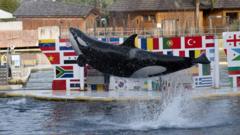
The recent closure of Marineland Antibes in France has cast a cloud of uncertainty over the future of two captive killer whales, Wikie and Keijo. This decision, prompted by new animal welfare regulations that will prohibit the use of dolphins and whales in marine shows starting next year, has reignited discussions among stakeholders about the best approach for the orcas, who were both born in captivity.The management of Marineland stated that the absence of shows featuring these marine mammals, which attract over 90% of its visitors, renders the park nonviable. Although several relocation options have emerged, a consensus is yet to be reached on the most suitable and ethical destination for Wikie and Keijo.Experts argue against the notion of releasing the orcas into the wild, likening such actions to placing a domesticated dog in a forest to fend for itself. Hanne Strager, a marine biologist and author of *The Killer Whale Journals*, states that these whales have established their social bonds and support systems with humans, which would make reintegration into the wild unfeasible.Campaigners, including the charity World Animal Protection, are advocating for the whales to be moved to a sanctuary rather than to other marine entertainment venues. A controversial plan to transfer them to Japan, which was blocked by the French government due to animal welfare concerns, further fueled tensions.One suggested alternative is Loro Parque in Tenerife, Spain. While it adheres to European welfare standards, campaigners fear that the orcas would still be subjected to performance demands. Additionally, the complex has experienced several orca fatalities in recent years, raising further alarms about their treatment. The Whale Sanctuary Project (WSP) has proposed a more supportive option—rehoming the orcas to a specially constructed facility off the coast of Nova Scotia. The sanctuary plan would provide a closed-off area of seawater, allowing the orcas to live in a more natural setting while receiving necessary vet care and social interaction.Similar initiatives have succeeded in the past, such as the case of Keiko, the orca from the *Free Willy* movies. Unlike Wikie and Keijo, Keiko was born in the wild and successfully learned survival skills before he ultimately joined a pod of orcas.Nevertheless, experts caution that introducing captive whales to new environments can be fraught with challenges. Strager emphasizes the psychological ramifications of sudden shifts for the orcas, whose entire lives have been intertwined with human caretakers.The closure of Marineland also echoes a broader movement against marine captivity that has gained momentum in recent years, driven in part by high-profile protests and documentaries like *Blackfish*. Former Marineland patrons and advocates alike are calling for a future where such violations of animal rights are thoroughly addressed.As the debate regarding the orcas' next steps continues, one thing remains clear: the future of bright-eyed Wikie and her son Keijo hangs in delicate balance amid a landscape rapidly changing in the context of marine mammal welfare.