In brief
At Rio Tinto’s Greater Nammuldi iron ore mine in Western Australia, over 50 autonomous trucks are revolutionizing the mining industry. This article discusses the safety enhancements and productivity benefits of this technology while addressing potential challenges and the evolving workforce.
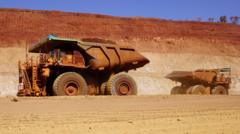
In the heart of inland Western Australia lies Rio Tinto's Greater Nammuldi iron ore mine, a remote site about a two-hour flight north of Perth, where a fleet of 300-tonne autonomous trucks is reshaping the mining landscape. With no permanent residents and approximately 400 workers flown in for shifts, the sprawling operation comes alive with giant, self-driving trucks navigating the red earth terrain, a stark contrast to the isolation of the Pilbara region.During a recent visit, I witnessed these colossal vehicles move smoothly along their pre-defined paths, controlled remotely from Rio Tinto’s Operations Centre (OC) located 1,500 kilometers away in Perth. The sheer size of these trucks is daunting enough, but the absence of a human driver at the wheel raises the stakes, demonstrating a leap into the future of mining that prioritizes automation for improved safety and productivity.As we edged into the autonomous zone of the mine, our vehicle was equipped with state-of-the-art GPS technology, fitting seamlessly into a virtual mapping system that marked our position and allowed the trucks to adjust their routes, ensuring safe operations. This high-tech approach incorporates laser and radar systems that proactively detect obstacles, significantly mitigating collision risks—an advancement welcomed by a traditionally hazardous industry.Since the introduction of autonomous machinery in the late 2000s, the shift towards automation in the Pilbara region has gained momentum, making Australia a leader in this transformative technology. Rio Tinto boasts one of the largest fleets of self-driving trucks worldwide, accounting for 84% of its total fleet, alongside an autonomous rail network and nearly 40 automated drills.The move towards automation stems primarily from a desire to enhance worker safety. Matthew Holcz, managing director of Rio's Pilbara mines, noted a marked increase in safety since the implementation of autonomous vehicles—a crucial consideration in an industry that faces numerous hazards related to machinery operation and worker fatigue. Furthermore, productivity has surged by approximately 15%, aided by the uninterrupted operation of self-driving trucks that can work continuously without the breaks regular operators require.However, the significant investment in automation—estimations suggest costs running into billions of dollars—has sparked discussions about the future of jobs within the industry. Counter to fears of job losses, management indicates that the evolution of roles has mostly focused on reskilling. Controllers managing the autonomous fleet have often transitioned from traditional positions, leading to a different workforce dynamic rather than outright diminishments.Even as automation ushers in a new era for the mining sector, experts warn that there is still ample room for improvement. Robin Burgess-Limerick, a human factors professor, raised concerns regarding the design of interfaces used by controllers and noted the potential for overwhelming workloads, calling for better attention to usability in technology design. There are also valid questions about the capacity of the trucks to function in varied environmental conditions, such as wet roadways, which have previously hindered operations.The ongoing dialogue surrounding automation in mining highlights a complex balance between technological advancement and human oversight. While the tools of mining are becoming increasingly sophisticated, the human element remains vital, offering insights and oversight as the industry navigates these changes.Rio Tinto continues its path toward greater automation with plans for more advanced technologies, including fully automated excavators and loaders. Yet, as the day winds down and unforeseen flight cancellations complicate logistics for the site's workforce, it’s evident that despite innovations, the multifaceted challenges of human management persist in stark contrast to the seamless efficiency of robotic systems.