
In brief
Amidst a growing backlash against over-tourism, Spanish cities like San Sebastian and Seville are witnessing rising anti-tourism protests. Locals argue that tourism-driven economic models are harming their communities and exacerbating housing crises, prompting calls for a reevaluation of tourism practices as winter tourists continue to arrive.
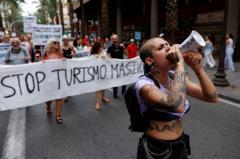
Spain's tourism sector, once celebrated for its economic contributions, finds itself under scrutiny as locals across various regions take to the streets to voice concerns over the impact of mass tourism. Protests have shifted into the colder months, demonstrating that the local community's frustration remains unresolved. On Sunday, protestors in San Sebastian are expected to rally under the slogan: "We are in danger; degrow tourism!" November will see similar actions in Seville, with thousands recently gathering for anti-tourism demonstrations in the Canary Islands. Initially ignited in April 2023, these protests highlight a growing discontent with the excessive influx of visitors following the post-COVID travel resurgence. The consultancy Braintrust forecasts that Spain will welcome 90 million foreign visitors this year, with projections indicating 115 million by 2040.A focal point of the protests is the notion of "touristification"—the transformation of cities to cater primarily to tourists at the expense of local residents' needs. Asier Basurto, a member of the Basque civic group Bizilagunekin which organizes the San Sebastian protests, argues that an increasing number of services and public spaces are being repurposed for short-term tourist convenience, reflecting a disturbing trend where locals feel marginalized in favor of transient visitors.One of the most pressing grievances stems from the housing crisis exacerbated by tourism. Resulting from the boom in short-term rental accommodations, rental prices are skyrocketing, pushing many locals out of the historic areas of popular tourist cities. Reports indicate that nearly half of Spain's renting families are at risk of poverty due to this trend, fueling the protests.In contrast, supporters of the tourism industry assert that it fuels 13% of Spain's GDP and accounts for roughly three million jobs. Recent incidents of escalating tensions, including tourists facing hostility and vandalism near popular attractions, have raised concerns regarding the measures some locals might take. In response to these tensions, local authorities are implementing restrictions in tourist-heavy regions, such as banning short-term apartment rentals in Barcelona by 2028 and imposing visitor limits at natural sites in Tenerife. The growing concern has also sparked debate about the potential emergence of "tourism-phobia," with calls for both residents and tourists to coexist without conflict.Despite these initiatives, protesters argue that the current changes are inadequate. "Those who advocate tourism can no longer say that everything is rosy," warns Basurto. As protests continue, there remains a call to action—an urgent plea for a sustainable tourism model that respects community integrity while still acknowledging the sector's significance to the economy.


