
In brief
As families stream back into Tyre, southern Lebanon, the aftermath of Israeli air strikes reveals a landscape of destruction, challenging their hopes for recovery amidst an uncertain future.
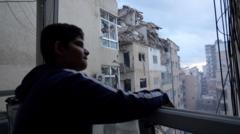
In the once-bustling city of Tyre, families sift through the rubble of their lives following a recent ceasefire between Israel and Hezbollah. One such family, led by car dealer Mohamad Marouf, stood in disbelief as they surveyed their former home. "It’s just sad—this was a nice and decent house," he lamented while maneuvering through the debris. The destruction is immense; entire ceilings had collapsed, furniture lay shattered, and remnants of household items were strewn about, remnants of a life upturned by violence."It's overwhelming,” he continued, as he reminisced about objects now destroyed and expressed gratitude for those that survived the barrage. The impact of an attack nearby reverberated throughout their building, leaving it severely damaged even though it wasn’t the direct target. "I don’t know what to do," he repeated, highlighting the uncertainty faced by displaced residents. For now, he and his family confined themselves to living with relatives, with no timeline for return to their own home.On the Tyre beachfront, the visible scars of conflict were underscored by a provocative banner featuring Hezbollah’s logo, proclaiming "Made in USA" with contempt for the munitions used against them. As the ceasefire took hold, a steady influx of vehicles brought back displaced families clutching bags and mattresses. Amid cheers, some waved Hezbollah flags, declaring the ceasefire as a badge of honor and a military victory despite the extensive destruction echoing their claims.Yet, this claim is contentious; many in Lebanon criticize Hezbollah for exacerbating tensions that brought further misery to an already beleaguered population. The toll of the conflict has been staggering: approximately 4,000 lives lost and over 16,000 injured, per the Lebanese health ministry. Despite the ceasefire offering a temporary halt to hostilities, it does little to address the war's root causes.The conflict ignited in October 2023, when Hezbollah launched attacks in solidarity with Palestinians. A swift reaction from Israel ensued, culminating in intensified air strikes and a ground invasion aimed at eliminating Hezbollah's presence along the border, resulting in mass displacement exceeding a million people.Now, with a provisional 60-day ceasefire in effect, both sides will withdraw from southern Lebanon, allowing a redeployment of Lebanese military forces. However, many inhabitants remain skeptical about the long-term stability of the region. Hezbollah organized a tour for the press, showcasing the destruction while asserting their strength and resolve. "This [destruction] doesn’t defeat a man as long as one has the will to fight," declared a Hezbollah MP amidst the ruins.Local business owners like Deed Badawi, who watched his restaurant suffer after over 80 years of operation, remain resilient. "They destroy, we build again," he vowed, articulating the community's spirit to recover and rebuild in the face of adversity. Conversations in corner shops echoed similar sentiments, as shopkeepers began the slow process of cleaning up from the wreckage, brimming with emotion over losses that transcended physical structures.However, the road to recovery appears daunting and fraught with uncertainty over financing and restoration. Mr. Marouf clung to the hope that Hezbollah would assist him in repairing the damage, embodying a widespread desire among residents for support amidst this catastrophic upheaval. "May God protect us all," he concluded, reflecting the collective hope for rebuilding a future amidst the ruins.
