In brief
Bordeaux's transition to alcohol-free wine is reshaping the future of the French wine industry amidst economic challenges and changing consumer habits, with innovative methods improving the quality of these beverages and allowing non-drinkers to engage in wine culture.
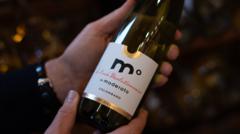
In the picturesque vineyards of Bordeaux, the once-unthinkable has become a reality: the emergence of alcohol-free wine is reshaping the landscape of France's renowned wine industry. What was once a taboo is now being embraced as a viable option for both producers and consumers, driven by scientific advancements and shifting economic tides.Prominent Bordeaux oenologist Frédéric Brochet, who pioneered the Moderato range of no-alcohol wines, acknowledges the progress made in recent years. “When we started a few years ago, what we were making was frankly rubbish," Brochet explains. "But we have made great progress. And today we are getting nearer and nearer to our goal. I think it is going to be a revolution in the wine world."Recently, Bordeaux celebrated the launch of its first dedicated alcohol-free wine shop, and the excitement amongst local wine growers is palpable. Alexandre Kettaneh, co-owner of Les Belles Grappes, reports that grape growers, previously hesitant to explore non-alcoholic options, are now enthusiastically seeking insight into this burgeoning market.Several factors have contributed to this shift. First, the French wine sector is currently grappling with declining domestic consumption and a less favorable international market—most notably from China. Second, younger generations are embracing healthier lifestyles, leading to changing consumption patterns in which beer, including alcohol-free options, now typically commands more supermarket shelf space than wine. Currently, 10% of France’s beer market consists of alcohol-free varieties, while in Spain, the figure rises to 25%.Technological advancements have also played a key role in improving the quality of alcohol-free wines. Traditional methods of removing alcohol were often subpar, resulting in products that were classified as "beverages based on de-alcoholized wine." Modern techniques such as low-temperature vacuum distillation and aroma recapture allow producers to create wines that not only meet legal definitions but also appeal to discerning palates."We cannot pretend we can replicate, yet, the full mouth-feel," admits Fabien Marchand-Cassagne of Moderato. "But what you will get is a genuine wine moment. Bouquet, tannins, fruits, balance – it is all there to be enjoyed."At the Clos De Bouard estate in Saint-Emilion, the shift toward non-alcoholic options has proven lucrative, with one-third of sales attributed to the estate's alcohol-free brands. Owner Coralie de Bouard recalls the skepticism she faced when she began developing a non-alcoholic wine for Qatari investors in 2019, resulting in familial fallout. Nevertheless, she has since gained applause for embracing this innovative direction.Critics, particularly from traditionalist backgrounds, have expressed concern about losing the essence of winemaking. Bernard Rabouy, a wine-grower from the Bordeaux Families cooperative, urges his peers to adapt, stating, "We have to evolve. The fact is that the customers aren't where they used to be."The rise of alcohol-free wine also fosters inclusivity, allowing those who abstain from alcohol to engage in the social rituals surrounding wine. “What we want to do is try to bring back the France of our youth,” says Anne Kattaneh, championing a culture where non-drinkers can still partake in the joy of sharing a bottle.Oenologist Brochet reinforces this revolutionary sentiment, positing that traditions in the wine industry are not immutable. “Things evolve. Once upon a time the barrel was an innovation. The cork was an innovation; grape varietals were an innovation. And now this is a new one – which could help save the industry and the wonderful landscape and culture that goes with it.” As change sweeps through the vineyards, it appears that the future of French wine may lie in embracing the unexpected.