In brief
As citizens reflect on the scars of past authoritarian regimes, they're united in their commitment to preserving hard-won democratic freedoms amid today's political turmoil.
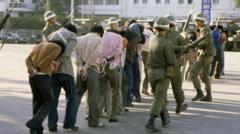
In South Korea, the scars of past martial law are still fresh in collective memory. Koh Jae-hak, now 87, recalls a haunting scene from April 1960 when soldiers fired on protesters demanding the resignation of the dictator Syngman Rhee. The brutal crackdown marked a sadly recurring theme in a nation that endured 16 martial law periods under dictatorial rule before finally transitioning to democracy in 1988. The recent declaration of martial law by President Yoon Suk Yeol has triggered alarm among the populace, recalling the fears of a losing hard-fought freedoms. Lawmakers rushed to the national assembly to overturn this decision as citizens gathered to protect the legislative building from military intervention. The president, who cited a need to combat "pro-North anti-state" forces, faced backlash as many doubted the legitimacy of his claims, suspecting he aimed to stifle political dissent rather than respond to a real threat.Historically, martial law in South Korea has been invoked under the pretext of stabilizing a chaotic landscape. Kelly Kim, an environmental activist, expressed her dread at the government controlling media and activities under martial law, a specter that would dismantle the democratic freedoms that have been celebrated over the decades. The traumas associated with previous martial law declarations resonate deeply among citizens who remember the Gwangju uprising of 1980. As history has shown, it was during this period that protestors were met with violent military suppression, resulting in a toll that remains a painful chapter in the nation’s narrative. Creativity in Korean culture has begun to engage with this painful past, with films and dramas reflecting on those dark days. Marina Kang, a web designer, voiced her concerns on social media, asking if the nation was indeed poised to relive those times. Younger generations, largely shielded from living through martial law but informed by family histories, grapple with their fears of returning to such a reality.Despite differing opinions about the historical justifications for martial law, the overwhelming sentiment among South Koreans is a commitment to democracy. While some older citizens like Kang Hyo-san view historical martial law as necessary at times for national stability, he, along with many others, decried Yoon’s actions as lacking any real justification.Koh and Kim stand united in the belief that democracy has been hard-earned and should be fiercely defended. The recent attempt at martial law was met with resistance and ultimately was seen as a failure, reinforcing the resolve of those who fought for the democratic freedoms they cherish today. In South Korea's vibrant civic society, the message is clear: the people refuse to let history repeat itself. The stakes are too high to allow complacency in the face of political maneuvers that threaten their cherished freedoms.