
In brief
Kamala Harris aimed to rally women voters in her bid for the presidency, but she fell short of necessary margins. An analysis reveals significant declines in support among key demographics, emphasizing economic concerns over reproductive rights as central issues in the election.
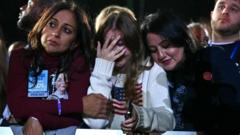
Kamala Harris' presidential campaign was notably centered around rallying female voters, but the anticipated turnout was not as robust as her team had hoped. With polls indicating a potential gender gap in favor of Harris, the Democrats were hopeful for an over-performance among women that could compensate for losses in other demographics. Unfortunately, the reality proved different.While Harris did receive a majority of votes from women across the United States, the support did not reach the historic margins needed for her to secure a win. According to preliminary exit polls, her lead among women voters stood at around 10 points, which notably fell four points short of Joe Biden's support in the 2020 election. The Democrats also faced a staggering 10-point drop among Latino women, while non-college educated women continued to favor Trump, as indicated by data suggesting a 63-35 split in his favor.Throughout her campaign, which spanned 15 weeks, Harris focused heavily on issues facing women, particularly reproductive rights. She consistently framed her campaign as a fight against what she termed "Trump abortion bans," highlighting the urgency of restoring the rights lost with the overturning of Roe v. Wade. "I will fight to restore what Donald Trump and his hand-selected Supreme Court justice took away from the women of America," Harris stated at a closing event.Despite the widespread support for abortion rights among Americans—evidenced by favorable results in states where the issue was on the ballot—the enthusiasm for Harris remained stagnant. Pollster and campaign consultant Evan Ross Smith noted that while those most passionate about abortion were already siding with Democrats, the broader female electorate did not prioritize it as a decisive issue. "The abortion argument did not penetrate at all with non-college educated women," he added, while also noting lost ground with Latino voters.Economic issues, particularly inflation and affordability, surfaced as the primary concerns for many voters. Independent voter Jennifer Varvar from Colorado highlighted her family's financial struggles as a chief motivation for voting for Trump. "We’re in a worse position now than we ever have been financially. It’s a struggle," she conveyed.In the wake of the election, analysts suggested that while gender dynamics played a role, lingering societal sexism may have also contributed to Harris' defeat. There has been speculation that the U.S. remains hesitant to elect a female president, despite a perceived shift in readiness since Hillary Clinton’s time. A recent poll indicated that 15% of respondents might not support a female candidate for president, illuminating the challenges ahead for women in politics.As the narrative unfolds, Trump's unwavering embrace of traditional masculinity may have resonated with voters, shaping perceptions of presidential capabilities in a unique way that Harris was unable to counteract.


