
In brief
The guest list for Donald Trump's state banquet at Windsor Castle featured a mix of royals, tech leaders, and political figures. Unlike typical celebrity-studded events, the focus was on influential names such as Tim Cook and Rupert Murdoch, seated alongside members of the royal family. The dynamics of the seating arrangements offered insights into current diplomatic relations and the intersection of business and politics.
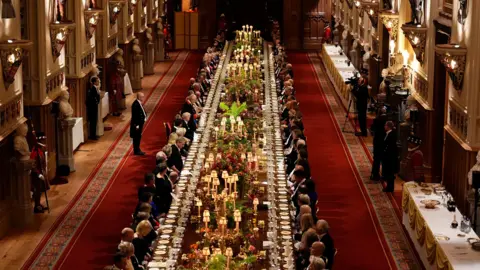
Beneath gilded portraits and suits of armour in Windsor Castle, 160 guests wined and dined at a lavish banquet to fete US President Donald Trump's unprecedented second state visit to the UK on Wednesday evening. The meticulously planned guest list, mainly comprising royals, tech and finance executives, and politicians from both sides of the Atlantic, overlooked the usual celebrity presence.
Trump's seat at the table next to King Charles III was the center of attention, flanked by influential figures such as Apple CEO Tim Cook, Nvidia's Jensen Huang, and OpenAI's Sam Altman. Meanwhile, the event's ambiance was complemented with a three-course meal and a custom cocktail, showcasing British hospitality.
Among the notable attendees, Rupert Murdoch's presence was particularly fascinating given the ongoing tensions between Trump and his media empire. Notably, these business leaders represented entities worth nearly \$10 trillion, highlighting the financial stakes in the UK.
The soirée, heavily populated by Trump's camp, emphasized existing relationships, with nearly two dozen seats reserved for high-ranking officials, including his wife Melania Trump and Secretary of State Marco Rubio. The seating arrangement itself provided a narrative into the key alliances and discussions taking place around the banquet table.
Notably, various royals were also seated alongside influential powerbrokers, bridging connections between the British monarchy and US business interests. With discussions surrounding investment and policy during the banquet, it remains to be seen how these relationships will shape future diplomatic and economic ties.
This year's state banquet exemplified the evolving landscape of international relations, where the lines between diplomacy, finance, and traditional social gatherings increasingly blur.

