A new Bollywood spy film is generating praise - and unease - in India and Pakistan for its contentious portrayal of the longstanding hostilities between the South Asian neighbours.
'Dhurandhar', which hit cinemas last week, plunges audiences into a high-octane world of espionage, gang wars, and patriotic fervour.
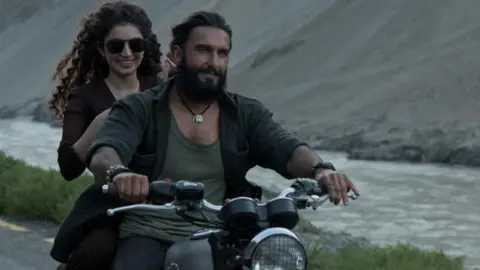
Anchored by Bollywood star Ranveer Singh's swaggering performance as Hamza, an Indian spy on a perilous mission in Karachi, the film traces his battles against criminal networks, shadowy operatives, and personal demons - all framed against the backdrop of India-Pakistan tensions.
While the action-packed sequences and riveting plot have earned praise from many viewers, the film, directed by Aditya Dhar, has also provoked sharp debate over its political messaging and treatment of historical events.
Dhar first gained national attention in 2019 with his debut 'Uri: The Surgical Strike', a dramatization of India's 2016 airstrikes on Pakistan. The film was a major box-office hit and earned him a national film award.
Though 'Dhurandhar' is only his second directorial effort, he has co-written and produced other films, including last year's 'Article 370' about the 2019 revocation of Kashmir's autonomy, which was a major success and earned praise from Prime Minister Narendra Modi.
'Dhurandhar', arriving months after the worst India-Pakistan military clash in two decades, sees Dhar return to the political-thriller genre on a grander scale.
Deadly fights erupt in cramped rooms, gunfire rattles through crowded alleys, leaving behind trails of bodies, and torture scenes linger uncomfortably long. The violence is graphic and filmed in tight, suffocating frames that heighten the sense of discomfort.
Online, praise and criticism have flowed in equal measure - some are impressed by the film's cinematic ambition, while others find its hyper-nationalist tone and use of violence unsettling and inflammatory.
The debate has grown so heated that some reviewers faced backlash, with 'Dhurandhar' supporters accusing them of judging the film through political bias rather than cinematic merit.
The Film Critics' Guild, an association of critics, issued a statement condemning the targeted attacks, harassment, and hate directed toward film critics for their reviews of 'Dhurandhar'.
Despite the polarized reactions, the film has been drawing large audiences and has already become one of the year's biggest hits.
The trend is not surprising. In recent years, Indian cinema has seen a surge in nationalist blockbusters that openly reference government policies and historical events.
Films such as 'The Kashmir Files' and 'The Kerala Story' have become major commercial successes despite sparking intense debates over their historical accuracy and political messaging.
Spy thrillers have also long featured prominently, often portraying Pakistan as the biggest threat to India - a familiar trope rooted in decades of geopolitical tension between the two countries.
The makers of these films argue that they resonate with audiences because they address historical events and contemporary issues often overlooked by mainstream commercial cinema.
But critics argue such films, with their outright fabrications of key events, increasingly blur the line between entertainment and propaganda, flattening complex histories into oversimplified storylines.
'Dhurandhar' presents itself as an espionage thriller with an unflinching nationalistic tone, falling squarely within this expanding genre.
Even before it was released, 'Dhurandhar' faced legal scrutiny after the family of a late army officer alleged that parts of the plot were based on his life without seeking permission. Dhar denied this, and the film was eventually cleared by India's Central Board of Film Certification as a work of fiction.
The film openly weaves several real-life events and historical flashpoints into the story, including news footage and real audio recordings of the attack on the Indian parliament in 2001 and the 26/11 Mumbai terror attack.
In fact, the story starts with a reference to the 1999 hijacking of an Indian passenger plane. The intelligence chief vows to strike Pakistan on its own soil, sending Hamza to destroy the alleged links between Karachi's gangsters and terrorist networks.
Dhar's portrayal of Karachi is bleak: a sprawling, lawless city where kidnappings and torture are rampant and revenge killings between rival gangs unfold with unrelenting brutality.
Some critics have flagged factual inaccuracies, such as the depiction of Karachi's Lyari gang, known for extortion and kidnappings, being linked to cross-border tensions with India, with calls for more accuracy.
Despite its inaccuracies and contentious themes, commentators suggest the film, like many before it, is unlikely to dent Bollywood's popularity in Pakistan, which lacks a comparable local film industry.
Ultimately, 'Dhurandhar' stands as a complex social commentary, resonating with themes of nationalism and identity that continue to define the socio-political landscape of South Asia.