
In brief
Polls have closed in Brazil’s 2026 general election after a day of long lines and a tight contest between President Luiz Inácio Lula da Silva and challenger Flávio Bolsonaro. Lula urged voters that the choice was between democracy and barbarism, while Bolsonaro promised to free the Brazilian people. Current polls show a two‑point gap, and if no candidate surpasses 50% a runoff will be held on 25 October. Over 158 million voters, including one million abroad, are registered, and preliminary overseas tallies give Lula a strong lead in countries like China and South Korea, but Bolsonaro holds majorities in Israel and Japan. The election also determines the composition of the Senate, with 54 of 81 seats up for grabs, and carries implications for Brazil’s relationship with Washington.
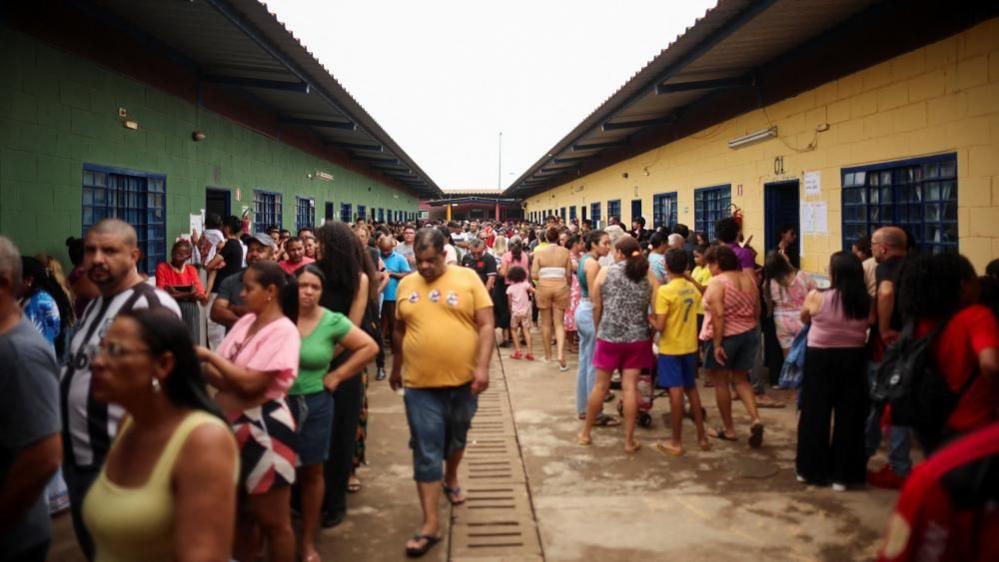
Polls have closed in Brazil’s 2026 general election following long lines at polling stations across the country, as President Luiz Inácio Lula da Silva and challenger Flávio Bolsonaro remain in a nail‑biting race.
Lula warned voters that the contest was about democracy versus barbarism as he cast his ballot in a public arena seen by thousands.
Bolsonaro, meanwhile, pledged to ‘free the Brazilian people’ after he topped the ballot box in a campaign that has drawn both praise and criticism.
Current polls show a two‑point gap between the two men, keeping the result uncertain. If no candidate reaches 50% of the vote, a runoff will be held on 25 October.
Brazil’s Superior Electoral Court (TSE) says that over 158 million Brazilians, including one million abroad, are eligible to vote in this election.
Under the country’s electronic voting system, the TSE expects official results within hours of the close of polls, which is a contrast to manual systems that can take days.
A Bolsonaro victory could deepen a wave of right‑wing governments across Latin America that are aligned with the United States, while a Lula win would complicate Washington’s trade and security relationships with Brazil.
Preliminary counts from overseas show Lula winning strongly in China, South Korea, New Zealand and Saudi Arabia, whereas Bolsonaro leads with large majorities in Israel and Japan.
The outcome will also reshape the Senate, as 54 of 81 seats are contested, with the Liberal Party currently holding the largest bloc, followed by the Social Democratic Party.
The contest follows the heated 2022 election where Lula narrowly defeated the late Jair Bolsonaro’s candidacy, and the ongoing fallout from the 2024 coup plot conviction that left Jair Bolsonaro barred from office.
Polling officials anticipate that the final results will be declared within hours, allowing voters to see who will lead Brazil next.