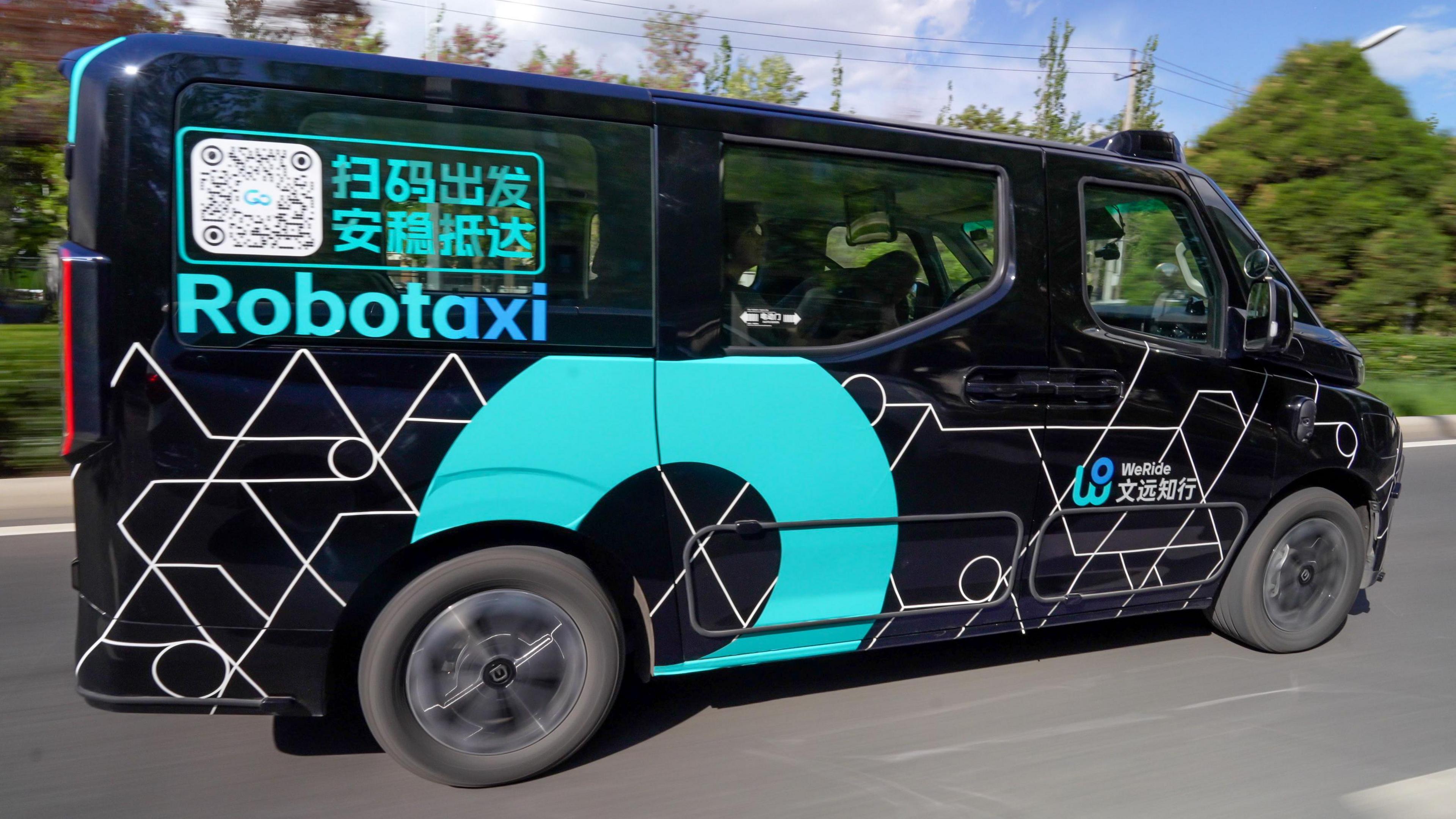
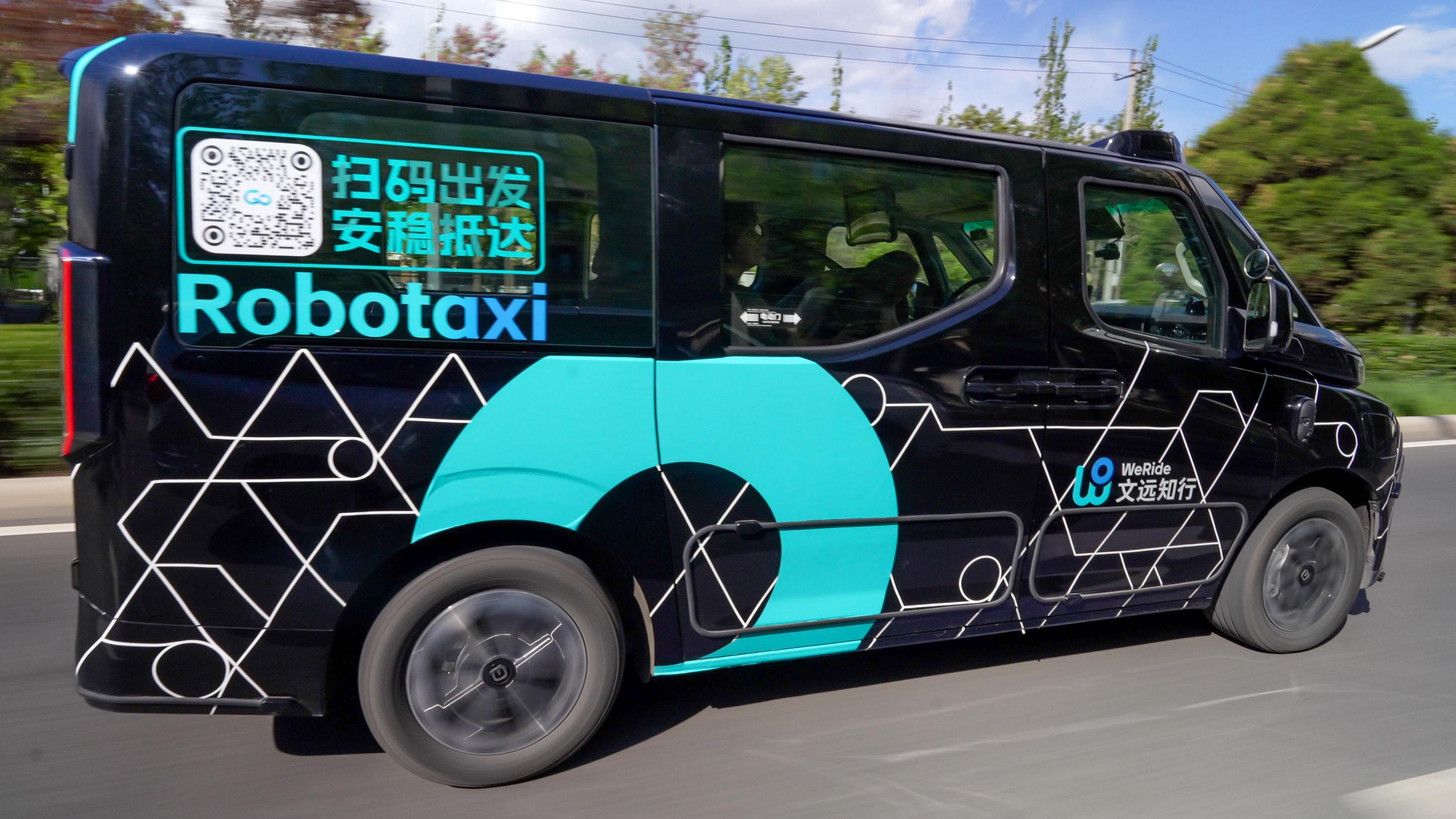
Chinese companies test autonomous cabs across China, hoping to match the electric vehicle boom.
A driverless city in flight
In Beijing’s Yizhuang district robotaxis march past ordinary cars, while delivery vans glide in a dedicated inner lane. Riders tap an app, confirm a journey on a touchscreen, and the vehicle navigates buses, scooters, cyclists and pedestrians in seconds.
EV infrastructure fuels autonomous tech
China’s EV dominance comes from a sprawling industrial ecosystem: makers such as BYD, Chery, Geely and SAIC supply chassis and batteries, while specialist firms develop sensors, chips and onboard software. Reusing the same components cuts costs and speeds up innovation.
Competition from the West
Waymo, Alphabet’s robotaxi business, is the world leader, with paid services already in several US cities. Baidu, WeRide and PonyAI operate smaller fleets in China, but face harsher regulatory, mapping and public‑trust hurdles. Uber and Lyft have partnered with Chinese firms to tap their customer base, while Waymo’s experience in customer service and app design remains a benchmark.
Safety and data‑privacy concerns
Baidu’s Apollo Go suffered a software glitch that stranded about 100 vehicles in Wuhan, and GM’s Cruise had a crash in California that led to a permit suspension. Such incidents erode confidence and expose the complexity of deploying robotaxis, which generate vast amounts of sensitive location data that foreign governments scrutinise.
Export prospects and geopolitical challenges
While Chinese regulators have loosened rules and introduced pilot roads, moving robotaxis abroad requires detailed mapping, local operating teams, and proof of safety – all more demanding than exporting a car. Economic ties, privacy laws and national‑security concerns can further hinder the global rollout.
The path ahead
WeRide argues regulators are warming to autonomous tech, but there remain questions about affordability, market acceptance and cross‑border data sharing. If China can replicate its EV success with robotaxis, it would cement a new high‑tech ecosystem, but the road will be crooked with safety trials, regulatory caps and geopolitical hurdles.