A South African court has dismissed an appeal by the country's heritage body to stop the sale and export of various artefacts connected to anti-apartheid hero Nelson Mandela.
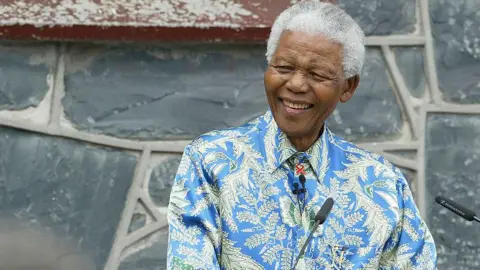
The 70 personal items include a cell key from Robben Island, where Mandela was imprisoned for 18 of the 27 years he was locked up, a pair of Aviator sunglasses, and one of his signature floral shirts. They were due to be exported to the US for auction.
The objects belong to his eldest daughter, Makaziwe Mandela, and Christo Brand, a Robben Island warden during Mandela's incarceration.
The authorities argued that these items were part of the country's heritage and, therefore, protected from export. The South African Heritage Resources Agency (Sahra) was first alerted to the potential sale in a British newspaper article from late 2021, claiming that the key could fetch more than £1 million ($1.35 million).
In its ruling, the Supreme Court of Appeal concluded that Sahra's interpretation of what constitutes heritage objects was overly broad and that Sahra had failed to substantiate its claims. The ruling supported the position of Makaziwe and Brand, who contend that the items hold significant personal value.
Makaziwe expressed her relief and criticized Sahra for its stance, emphasizing that no one is more invested in preserving Mandela's legacy than his family. She mentioned that the proceeds from the sale are intended to create a memorial garden at Mandela's grave. However, it remains unclear how the sale will proceed amid ongoing discussions about the fate of such culturally significant items.
As supporters of the sale advocate for the family's right to decide the items' fate, some oppose the auction, insisting that items linked to Mandela should be retained in South Africa for future generations.
Mandela, who passed away in 2013, is celebrated for leading the fight against apartheid and has left an indelible mark on history as South Africa's first democratically elected president.