In brief
Douna Haj Ahmed learns about her husband's traumatic experiences in Al-Khatib prison, known for its brutal conditions, highlighting the pain of many Syrians who have suffered in silence.
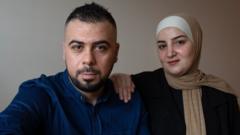
In early December, Douna Haj Ahmed, a Syrian refugee residing in London, was faced with gut-wrenching revelations about her husband Abdullah Al Nofal's harrowing past. The discovery came as she watched news footage of prisoners who had escaped Syria's repressive regime following the ousting of President Bashar al-Assad. Abdullah, sitting beside her, pointed to the screen and revealed, "This is where I was arrested."Douna recalls that although she was aware Abdullah had endured trauma during his detention, this moment marked the first time he openly discussed the details of his experience. "It was a turning point. I saw him weak. I saw him crying," she said, reflecting on the emotional toll of his recounting.Abdullah, 36, found himself caught in the turmoil of the Syrian civil war while working as a storekeeper for the International Committee of the Red Cross in July 2013. Although he had taken part in peaceful protests against Assad in 2011, a grim reality unfolded when he was stopped at a military checkpoint, leading to his capture and subsequent torment at the infamous Al-Khatib prison.His harrowing journey began with being handcuffed and blindfolded before facing brutal solitary confinement. "It was so dark for three days... You hear nothing. You feel so lonely," he expressed, highlighting the psychological toll of being isolated in the dark. Al-Khatib prison, notorious for its role in the Syrian government’s systematic abuse, housed numerous detainees facing torture and death. According to monitoring groups, around 60,000 people suffered severe abuse or were killed during the civil war. Recent historical trials in Germany have even led to convictions of Syrian officials implicated in such atrocities.In his month-long imprisonment, Abdullah endured physical torture and psychological horror. "Every minute it's like you're dying," he confessed, explaining the constant threat of violence faced by detainees. He witnessed fellow inmates, bloodied and traumatized, a sight that would haunt him long after his release.Although he managed to secure an education in Geneva and the U.S. before settling in London with Douna, sharing his story was a challenge until now. With the fear of retribution dissolving, Abdullah is ready to speak out. "We finally finished with the regime, we can say, we are really free right now," he remarked.Douna, an active human rights advocate, could barely contain her emotions as she listened to Abdullah’s tale. Each revelation brought fresh grief, revealing a darker reality that persisted beyond her expectations. "Lots of people, they died without being heard,” she lamented, emphasizing their fortune in being able to share their experiences.