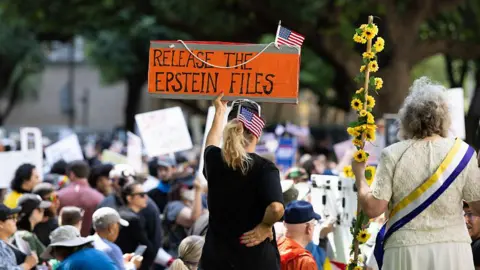
The US Department of Justice (DOJ) has removed thousands of documents related to Jeffrey Epstein from its website after victims said their identities had been compromised.
Lawyers for Epstein's victims stated that flawed redactions in the files released on Friday had 'turned upside down' the lives of nearly 100 survivors. Email addresses and nude photos in which the names and faces of potential victims could be identified were included in the release.
Survivors issued a statement calling the disclosure 'outrageous' and claimed they should not be 'named, scrutinized and retraumatized'.
The DOJ stated it had taken down all the flagged files, attributing the mistakes to 'technical or human error'. In a letter submitted to a federal judge, the DOJ confirmed that all documents requested by victims for removal had been taken down for further redaction.
The department is continuing to evaluate new requests and is actively checking for any other documents that may require further redaction. A considerable number of documents that were independently identified have also been removed, according to the DOJ.
These actions come in response to the requirements set forth after both chambers of Congress mandated the DOJ to publish Epstein-related documents with proper redactions to protect victim identities.
Following the release of the documents, which included approximately three million pages, representatives for the victims reached out to a federal judge requesting orders to take down the website hosting these files. They labeled the release as 'the single most egregious violation of victim privacy in one day in United States history.'
Survivors have expressed deep concern for their safety, with one victim describing the situation as 'life-threatening', particularly after the release of private banking details that had led to death threats. Another victim, Annie Farmer, stated, 'It's hard to focus on the new information that has been brought to light because of how much damage the DOJ has done by exposing survivors in this way.'
Efforts are ongoing to rectify the situation, as the DOJ acknowledged its responsibility regarding victim protection and has noted that it has redacted thousands of names in the millions of published pages to shield survivors' identities.
Epstein, a convicted sex offender, died in a New York prison cell while awaiting trial on trafficking charges in August 2019. The extensive release of files had initially been mandated by law under significant political pressure, aimed at ensuring transparency in the Epstein case.