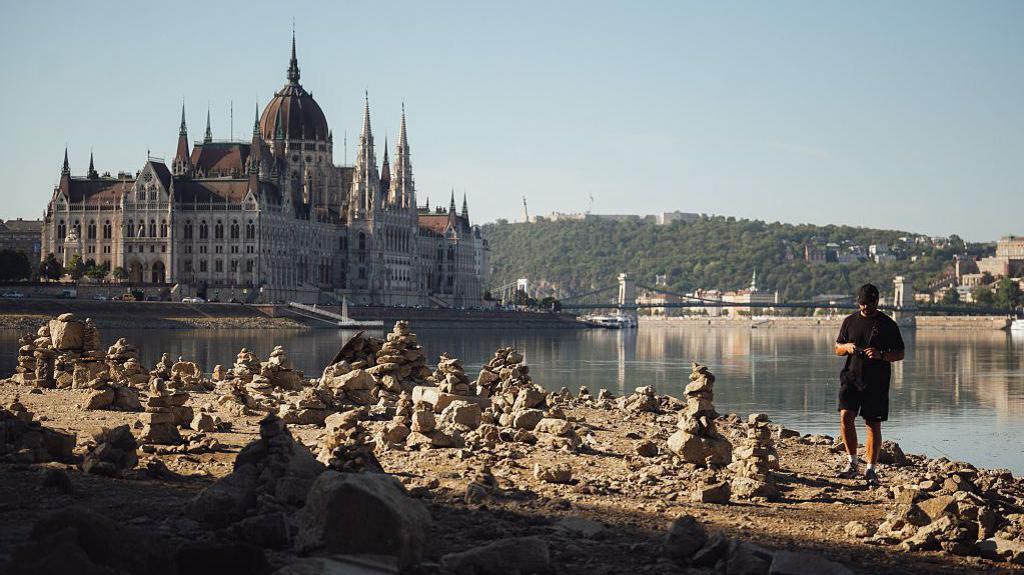
Hungary’s only nuclear power plant, the MVM Paks facility, has been forced to shut down permanently for the first time since its opening because the cooling water from the Danube River is now too shallow for the plant’s suction nozzles to reach.
The plant, a Soviet‑era installation, relies on the river’s water to keep its reactors safe. With the river’s depth approaching a record low for the past three decades, the plant cannot operate, jeopardising a significant portion of the country’s electricity supply.
Prime Minister Péter Magyar warned that the shutdown could render the nation’s energy supply “critical” from Monday onward, especially as a heatwave is projected to keep temperatures near 37°C for a full week.
Hungary’s neighbour Romania has seen a similar impact, with one of its two Cernavoda reactors temporarily offline to avoid shutting the other – a situation that could leave both countries without nuclear power for a period.
In addition to the power crisis, the low water levels are disrupting river traffic. Boats have stalled on the drained Danube, and a yacht was forced to evacuate passengers in Bulgaria because it could not dock near Vidin. The situation is unprecedented since 1990, according to Bulgarian maritime officials.
Environmental scientists note that the Danube’s average July flow is now less than one‑third of the historical norm, and the situation is expected to worsen before mid‑September. The ripple effect includes the visibility of ancient warships, cargo ships, and even mammoth remains that now lie on exposed riverbeds across the region.
The energy crisis has prompted the government to ask citizens to limit peak‑time electricity use between 17:00 and 22:00. A possible rotational shutdown regime is being considered if those measures don’t preserve grid stability.
These events unfold against a backdrop of increasing temperature extremes across Europe. Wildfires are spreading, with Greece and Turkey facing severe conditions and France and Spain recording some of the most intense wildfires in recent memory.