
In brief
Amidst the devastation of war, the fate of young Julia Abu Warda draws attention, revealing her family's harrowing journey through violence and uncertainty in Gaza.
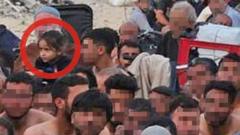
In a recent gripping photograph showing a group of Gazan men detained by Israeli forces, a small girl, Julia Abu Warda, stands out as a poignant reminder of the war's human toll. In the image, the men are stripped to their underwear under the orders of soldiers, with the backdrop of destruction visible behind them. Julia, just three years old, appears towards the back, looking away while the men gaze at the camera, an Israeli soldier likely behind the lens.This photograph, which first emerged on a Telegram account of an Israeli Defense Forces journalist, encapsulates despair and vulnerability in a war-torn environment. The little girl’s presence raises urgent questions: who is she, and what has happened to her in these dire circumstances? Since the image was taken, hundreds have been killed, further compounding the tragedy of this ongoing conflict.In collaboration with the BBC Arabic's Gaza Today programme, an urgent search was launched for Julia. Despite Israel’s restrictions on international media access to Gaza, a network of trusted freelance journalists was mobilized. Within two days, they located her. The family had found refuge in Gaza City after being displaced multiple times due to air strikes and violence.When the BBC journalist met Julia, she was safe, watching cartoons and alongside her father, Mohammed. Despite her physical safety, the looming threat of war was ever-present, with drones buzzing ominously overhead. Julia’s family shared the traumatic narrative that led to the captured photograph. Over the course of 21 days, they endured five displacements, fleeing from violence and chaos.On the day the photograph was taken, the family was forced to evacuate their neighborhood. In the frenzy of the environment around them, Mohammed and Julia were separated from other family members. As they reached an Israeli checkpoint, soldiers executed their routine security measures, holding them for several hours. Mohammed recalls how Julia remained calm in the picture but expressed distress when she cried out for her mother.Yet, the trauma extends even deeper. Julia's beloved cousin, seven-year-old Yahya, was killed in a drone strike merely weeks earlier. The family’s narrative blends the heart-wrenching reality of their plight with the harshness of their environment. In Julia’s new life, the sounds of war resonate with a surreal familiarity, and the impact on her young mind cannot be understated.According to UNICEF, thousands of children in Gaza have lost their lives since the start of the conflict. The agency stresses that nearly all children in the region are in dire need of mental health support amid this chaos. While Julia’s survival may seem like fortunate news amidst tragedy, it serves as a reminder of the devastating loss and emotional scars that linger for countless children affected by this ongoing war.Julia's experience is a reflection of the collective suffering faced by the people of Gaza, leading us to question how we can address and support the young survivors of such profound trauma.
