
In brief
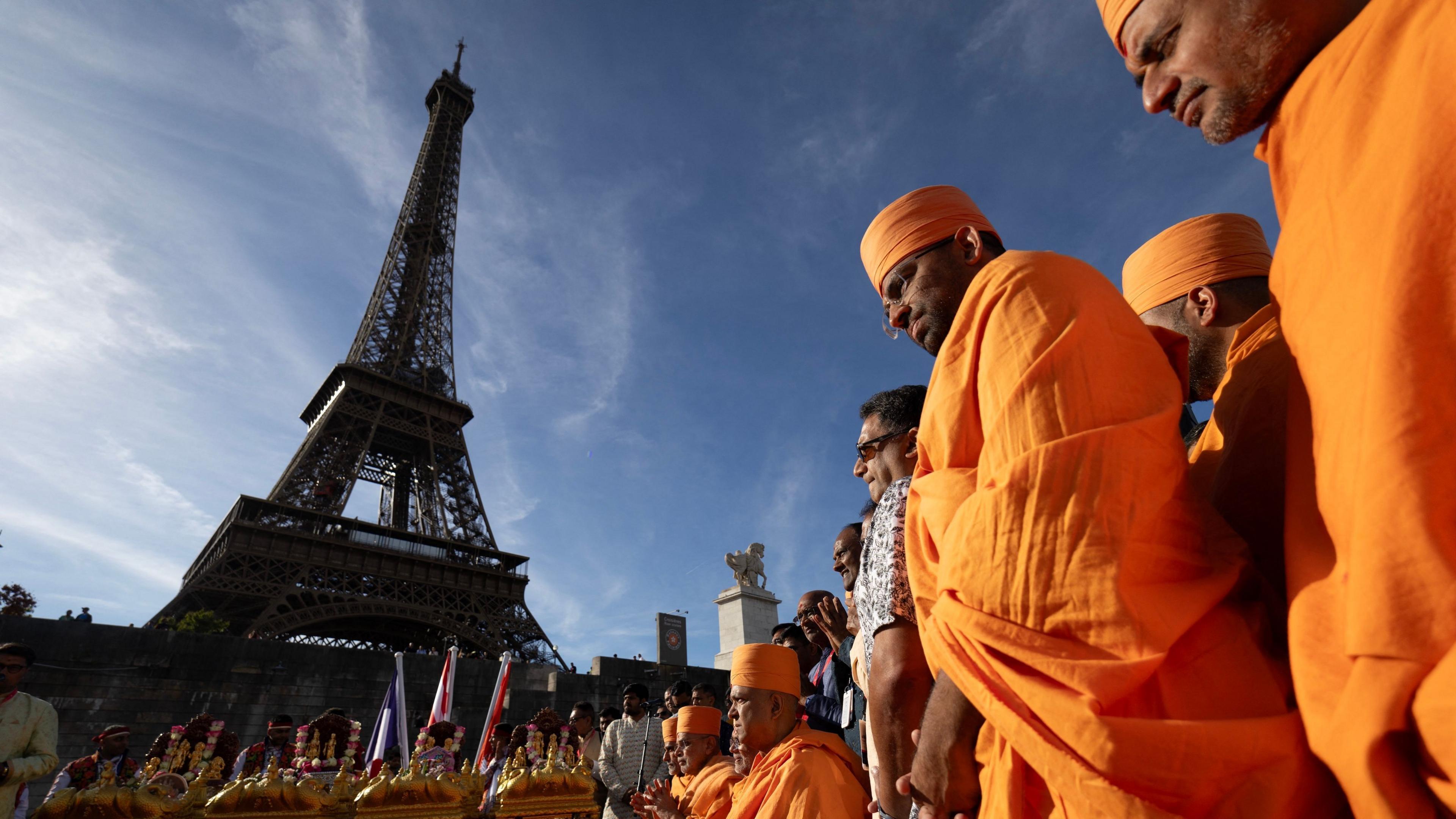
When a delegation of around 100 members of the Bochasanwasi Akshar Purushottam Swaminarayan Sanstha (BAPS) visited the Eiffel Tower, female staff were asked to step aside and were told to stay in restricted areas. The gesture, rooted in the religious group’s strict gender segregation practices, ignited a walk‑out strike by employees and brought scrutiny from Paris authorities. President Ariel Weil described the move as “totally shocking and unacceptable” and began an internal inquiry. French politicians from across the spectrum condemned the incident as discriminatory. The case highlights the tension between religious customs and France’s secular, gender‑equality values, and raises questions about the responsibilities of public landmarks in upholding inclusive standards.
When a delegation of around a hundred members of the Bochasanwasi Akshar Purushottam Swaminarayan Sanstha (BAPS) visited the Eiffel Tower on Saturday, female staff were told to leave their posts and were restricted from entering or crossing certain areas of the monument. The request, driven by BAPS’s strict male‑female segregation doctrine, sparked outrage among workers and led to a full‑day strike on Monday as employees walked out and called for a dialogue with management.
"Women were asked to leave their places of work," said union representative Diane Davoine. "We felt humiliated," she added. The movement, whose beliefs trace back to the eighteenth‑century Hindu ascetic Lord Swaminarayan, dictates that men and women remain separate in temple activities and during temple entry. BAPS said the delegation was organized to avoid disruption, but critics argue that the segregation policy is “discriminatory” and incompatible with modern principles of equality.
Ariel Weil, the president of the company that runs the Eiffel Tower and mayor of Paris Centre, condemned the incident as “totally shocking and unacceptable.” He announced an internal investigation to determine who approved the conditions that forced female staff to step aside, pledging that the situation will never recur. A statement from the Société d’Exploitation de la tour Eiffel (SETE) noted that “the conditions imposed on female staff are not in line with our values or the principles of equality between men and women.”
The incident drew swift political condemnation. President of France’s National Assembly Yaël Braun‑Pivet declared, “I refuse to allow women to be compelled to step aside in order to meet the demands of foreign visitors.” Marine Le Pen, a hard‑right French leader, warned that “in France, we will never accept that the presence of women be ‘limited’.” Former centre‑right Prime Minister Gabriel Attal, who will run for president next year, echoed that “in France, no culture, no belief, no worship, nothing can dictate to women their place.”
BAPS, which operates temples in cities worldwide—including London, Los Angeles and Sydney—apologised for any pain or inconvenience caused, asserting its commitment to “universal values of mutual respect and service.” The group frames the segregation policy as a benefit for women but faces criticism for perpetuating archaic practices in a modern, secular nation. The investigation at the Eiffel Tower highlights the continuing friction between religious traditions and contemporary French values of gender equality and secularism.