
In brief
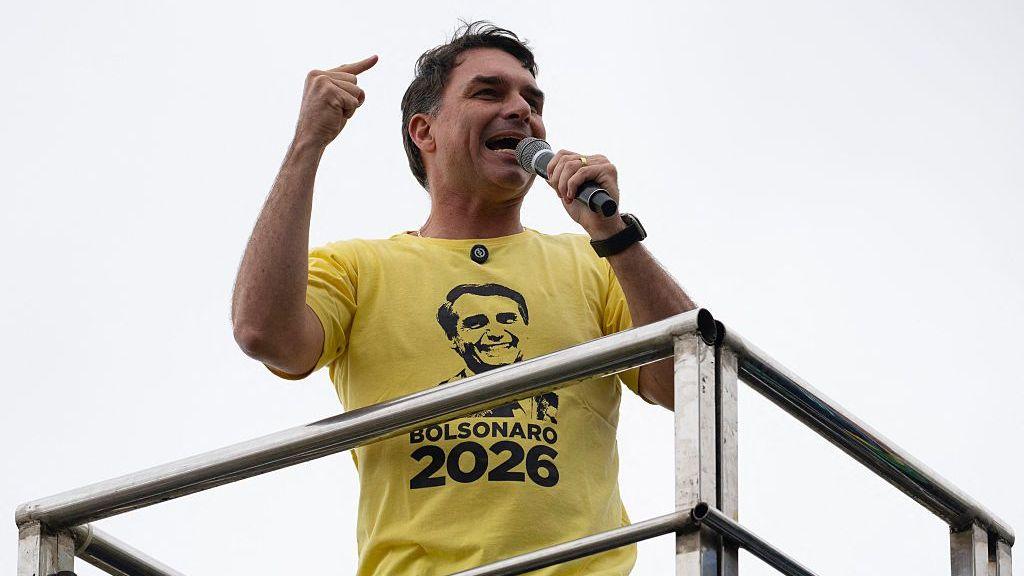
Flávio Bolsonaro, the eldest son of former president Jair Bolsonaro, topped the September 2026 presidential polls with 56.1 million votes, while Lula received 53.8 million. Analysts argue the win derives more from widespread rejection of Lula than Bolsonaro’s personal appeal. The result signals a resurging right‑wing tide across Latin America, amplified by critics of the Supreme Court and corruption allegations tied to Lula’s circle. With no clear majority, a second‑round showdown will test Lula’s ability to reverse an unprecedented deficit. The election also marks a consolidation of the Bolsonaro family’s influence, as their allies gain additional Senate seats.
By Leandro Prazeres, BBC Brasil
On Sunday, Brazil’s electorate delivered a surprise result as Flávio Bolsonaro, the 45‑year‑old eldest son of former president Jair Bolsonaro, topped the poll with 56.1 million votes. His main rival, Luiz Inácio Lula da Silva of the Workers’ Party, finished 53.8 million, a margin that falls short of the 50%+1 threshold required to win outright.
The contest is described by analysts as a “blue wave”, the latest surge of right‑wing momentum sweeping Latin America. Many observers see Bolsonaro’s success as stemming largely from voters’ rejection of Lula rather than enthusiasm for the young senator. Recent polls from respected institutes show both candidates share a nearly identical rejection rate of around 45 %, but Lula’s disapproval lines higher, at nearly 49 % compared with his 48 % approval.
Despite Lula’s record of low unemployment (≈5.3 %) and high average income, Brazilians remain dissatisfied with living conditions, prompting Lula to raise the Bolsa Família benefit by 15 % and to ban online gambling—a policy that critics tie to household income loss.
Bolsonaro has amplified his campaign focus on the Supreme Court, echoing his father’s criticism of the institution’s decisions, including the 2025 conviction and 27‑year sentence of Jair Bolsonaro for the 2023 coup‑style attack on Brasília. He also leveraged the Banco Master corruption scandal involving banker Daniel Vorcaro, whose ties to Justice Alexandre de Moraes (an ally of Lula) added further fuel to opposition narratives.
The election’s aftermath also shows the Bolsonaro family’s growing Senate presence: the Liberal Party’s seats doubled from 15 to 28, while co‑candidate Michelle Bolsonaro and son Carlos secured Senate seats. With no clear winner, a second‑round in late 2026 will test Lula’s ability to reverse the deficit and possibly overturn the current right‑wing trajectory.
For now, the country stands on the precipice of a political realignment, with the Bolsonaro legacy cemented as a formidable force in Brazilian politics and a broader Latin American right‑wing tide gaining momentum.