
In brief
David “Davey” Hearn, a three‑time U.S. Olympian, was indicted for vandalizing the Lincoln Memorial Reflecting Pool after its $14 million renovation. Authorities say Hearn tore a sealant strip, causing roughly $1,000 in damage and provoking a felony destruction‑of‑property charge. Hearn’s lawyers label the indictment as politically motivated, while President Trump publicly condemns the act and vows to repair the pool. The incident highlights broader maintenance challenges at the historic site and sparks debate about accountability in public spaces.
Kwasi Gyamfi Asiedu • 2 July 2026
David “Davey” Hearn, a 67‑year‑old former Olympic canoe champion, has been formally charged with vandalism after allegedly removing a strip of newly applied sealant from the bottom of the Lincoln Memorial Reflecting Pool on the National Mall. The indictment, issued by U.S. Attorney Jeanine Pirro, cites $1,000 in damage and a felony crime of destruction of property.
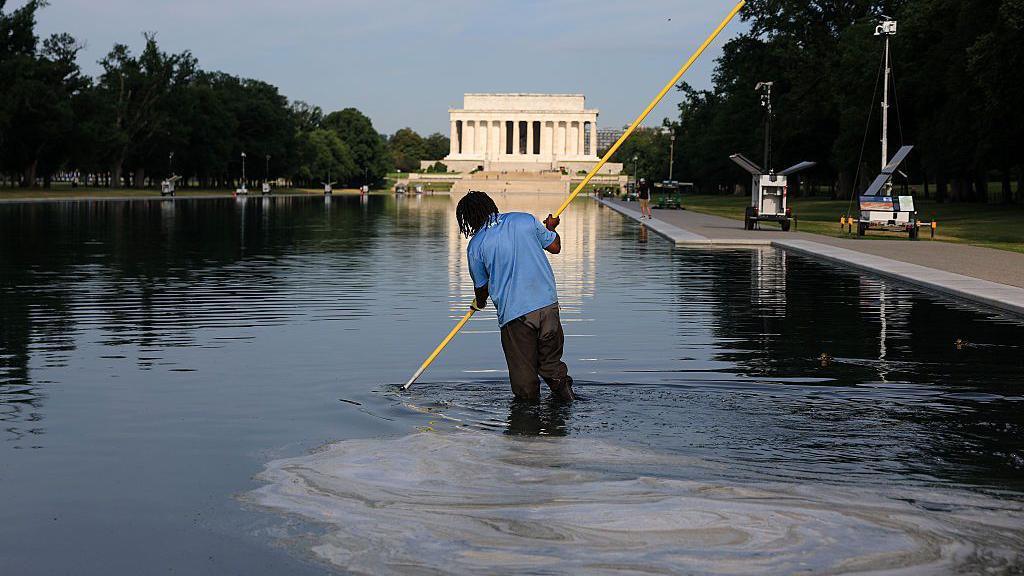
Hearn had been documented on June 19, 2026, walking along the pool’s edge after the recent $14 million renovation, which aimed to address long‑standing leaks and algae growth. Authorities say he reached into the water, ripped the sealant, and left the site in a state of disrepair.
The case has unfolded amid a broader context of preservation challenges. The pool’s renovation, completed a month earlier, has already seen several incidents of peeling spray, leaks, and algae blooms—a pattern that has drawn criticism from park officials and visitors alike.
Hearn’s attorneys have defended him, arguing that the indictment reflects a “political” attempt to scapegoat him for systemic failures. They claim that Hearn had no motive to damage the pool, noting that he was merely exercising curiosity about the area after a long bike ride, and that the material he touched had already been compromised by prior wear.
President Donald Trump echoed the call for accountability, posting on social media: “Work will begin immediately on fixing the seriously vandalized Reflecting Pool.” The President’s remarks have intensified scrutiny on who holds responsibility for the pool’s upkeep.
The incident underscores a national conversation about safeguarding public heritage sites and ensuring that legal accountability is applied fairly and transparently. As the case proceeds, local communities and stakeholders are monitoring the outcome closely, hoping for a resolution that balances justice with preservation.

