In brief
In 1936, Owensboro, Kentucky hosted the last widely publicised hanging in the United States, drawing a crowd of roughly 20,000 to witness the death of Rainey Bethea. Eight decades later, the U.S. Department of Defense announced that a future firing‑squad execution of Fort Hood shooter Nidal Hasan would be livestreamed, reigniting a debate over the spectacle of state‑sanctioned death. Scholars note that public support for the death penalty has fallen sharply, and many argue that turning a legal penalty into an online event erodes the dignity of both victims and the state’s moral authority. While reaction ranges from moral outrage to indifference, the move signals a regressive shift in how the country confronts violence and punishment.
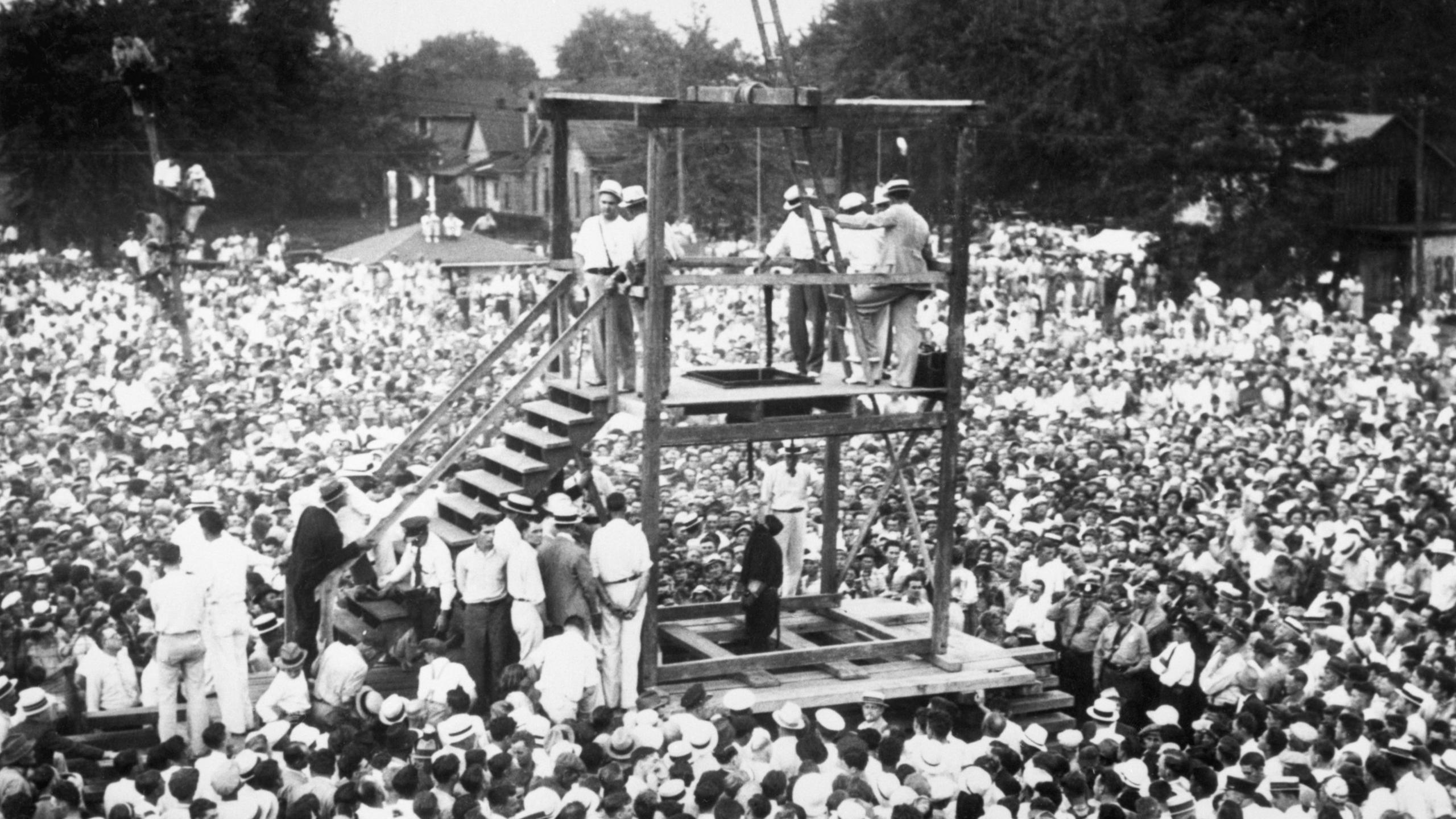
The last time an American mob turned up to watch a condemned man suspended from a rope was in 1936, when 20,000 people gathered in Owensboro, Kentucky, to see Rainey Bethea executed by hanging. Anillo‑ed black man, Bethea had been convicted of raping and killing a white widow, and the ceremony was turned into a macabre spectacle with press, food vendors and on‑hand witnesses. The event was a brutal reminder of how justice could be turned into an entertainment for the masses.
Fast forward 90 years, the U.S. Department of Defense announced that the execution of Fort Hood shooter Nidal Hasan would be carried out by firing squad and livestreamed. The Pentagon said the online broadcast would be a “necessary step” to show the public the seriousness of the crime. More than 90,000 spectators could watch from their homes, turning a law‑enforced act into a global spectacle.
Experts say the public’s appetite for overt violence has dramatically decreased. Michael Radelet, emeritus professor of law and criminology, noted that support for the death penalty has slipped from 80% in 1994 to just 52% today, and that many would prefer life‑without‑parole over a death sentence. He warned that livestreaming executions turns punishment into entertainment, “like a sporting event.”
The announcement has sparked a clash of emotions. Catholic bishops have called it barbaric, while some politicians, including former President Donald Trump, have expressed support for the decision without acknowledging the ethical concerns. Critics argue that airing such footage normalises state violence and exposes society to a endless stream of spectacle.
The revival of a public execution format signals a troubling turn in America’s legal culture. It raises serious questions about how a modern democracy handles crime, punishment and the very image of its institutions. As the country debates whether a livestreamed execution can ever be a dignified act of justice, the historical echo of 1936 crowd‑filled gallows serves as a cautionary backdrop.
Image source: Getty/Bettmann