In brief
In the tranquil hills of Herefordshire, a group of football coaches embarked on a two‑day military training exercise designed by the Football Association of Wales. Participants, including former internationals like Aaron Ramsey and Michael Bradley, faced simulated ambushes, hostage rescues and battlefield decision‑making. The experience revealed how harsh, high‑stakes tactics can sharpen coaching skills—strategic thinking, crisis management and adaptability. Leaders from the world of sport, brought together with ex‑military personnel, found new ways to approach leadership, while the intense drills highlighted the parallels between football’s pressure moments and real life combat situations. The course, often dubbed the “Harvard of football coaching”, serves as a powerful reminder that coaching success hinges on the ability to thrive under pressure and read emerging challenges quickly.
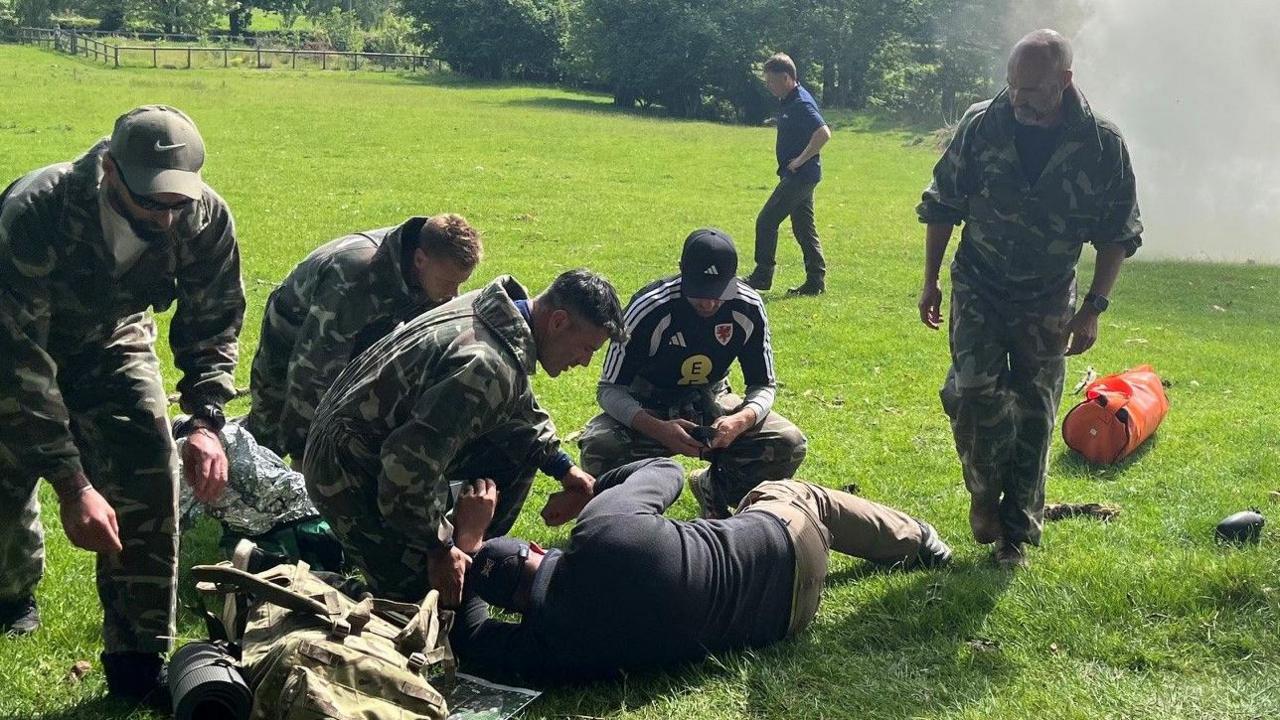
During a warm spring sunrise over Herefordshire’s green hills, a seemingly pastoral scene broke into a dramatic training camp. What initially looks like a peaceful countryside turned into a live combat simulation – complete with exploding fireworks, smoke and the roar of footsteps.
The dramatic backdrop set the stage for a unique experiment. Six coaches – from former Wales captain Aaron Ramsey to ex‑Chelsea goalkeeper Willy Caballero and a few others – were thrust into a life‑simulating drill designed by the Football Association of Wales (FAW) for their UEFA Pro Licence. The goal? To rescue a hostage in a dense forest, navigate hostile terrain, and survive a mock ambush.
It wasn’t a conventional football lesson. Rather, the coaches were treated as soldiers, required to apply decision‑making, risk assessment and quick‑action communication – lessons that mirror the pressure of a final match or a high‑stakes 90‑minute game.
While the exercise involved mock bodies with fake blood and payload bombs, the training was no joke. A team of former soldiers, military trainers and experienced coaches ran the scenario, ensuring that the intensity matched that of a real battlefield. Coaches had to plan lay‑off strategies, communicate clearly under stress and adapt when the “enemy” changed tactics on the fly.
The event also included a mix of people from every level of football. UEFA Pro Licence candidates ranged from seasoned veterans such as the then‑Mikel Arteta to current midfield stars like Florent Malouda and even a 36‑week pregnant former US international, Ella Masar. Their stories of exhaustion, camaraderie and stepping outside normal comforts added human interest to the harsh training.
The training finally rolled into a quiet war room – a dimly illuminated cavern where the group plotted “invasion strategies” and considered how they would handle hostile environments. A former football manager – Matt Johns, a former military commander – emphasized how the real shock meets real decisions. He noted, "The environment is unfamiliar, the moments of fear and uncertainty force them to adapt, # the study helps them learn what works in stressful moments."
After the first day of high‑energy drills, participants gathered around a wide black board. One player, a former Wales assistant – Piet Cremers – suggested how the lessons of the day could translate into the training of his side. Together, the group discussed personal take‑aways, reflecting on the stark difference between football’s stresses and life‑or‑death military scenarios.
Because the job of a football manager carries a daily pressure that is intensively high relative to other professions, this sort of training may equip coaches with resilience, adaptive thinking and a fresh perspective on decision‑making. Though the challenges in a football match are far from fatal, the session underlined that rigorous military drills can foster an understanding of discipline, teamwork and instinctive leadership that coaches may apply to their squads.