
In brief
In Guangxi, China's sinkholes, steeped in folklore and untouched for millennia, have transformed into popular tourist sites. While these natural wonders unveil unique ecosystems, experts warn that growing tourism may jeopardize their delicate environments.
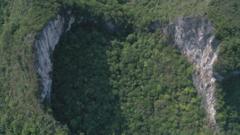
Giant sinkholes in China's Guangxi province are drawing intrepid tourists fascinated by the secrets they hold. Nestled deep within these “heavenly pits” are ancient forests that have remained largely untouched for thousands of years. Standing atop sheer limestone cliffs, tourists marvel at the tree canopies below, with sounds of cicadas and birds echoing off the walls. For centuries, these sinkholes, known as “tiankeng” in Mandarin, were feared as mystical realms filled with demons and ghosts. However, modern exploration, backed by drones and adventurous explorers, has revealed the breathtaking treasures concealed within. Remarkably, over two-thirds of the world's sinkholes are located in China, with Guangxi hosting the largest concentration, including a recent discovery that unveiled trees soaring to heights of 40 meters (around 130 feet).These sinkholes behave like time capsules, preserving unique ecosystems that are now at risk due to increasing tourist interest and development. Adventure seekers, like Rui and Michael, are captivated by the thrill of rappelling into this hidden world. With the guidance of experienced local explorers, such as Fei Ge, they are learning about the special microclimates existing within these formations.Fei, who grew up nearby, initially followed local superstition by avoiding the sinkholes. Yet curiosity drove him to explore, and he later collaborated with scientists who uncovered previously unknown plant species, including exotic orchids and unique cave-dwelling creatures. The intrigue surrounding these natural wonders has drawn attention from researchers worldwide.Sinkholes form primarily from erosion of limestone, which creates large cavities that can collapse, resulting in the striking pits seen today. These formations serve as living laboratories, allowing scientists to study biodiversity and climate history. Yet, as tourism grows—fueled by vibrant social media posts—concerns about environmental degradation intensify.While tourism has brought economic benefits to local villages like Ping'e, which previously faced poverty, there are growing calls for sustainable practices. Developers have constructed viewing platforms that overlook some of the deepest sinkholes, inviting visitors to experience a piece of nature’s grandeur without fully embracing the risks of overexploitation. Experts such as Dr. Lina Shen advocate for a balance that conserves these ecosystems while still allowing for responsible tourism. Potential solutions include creating innovative observation paths and limiting access to some areas entirely to protect fragile flora and fauna.Fei acknowledges the importance of drawing tourists while maintaining ecological integrity. As he oversees guided adventures into the sinkholes, he emphasizes the need to safeguard their natural beauty. Amidst the thrill of abseiling deeper into the cave, Rui and Michael reflect on the significance of their experience. They aim to enjoy the moment while recognizing their responsibility towards preserving this unique environment for future generations. The stunning sinkholes of Guangxi symbolize the delicate interplay between human curiosity and nature's fragile ecosystems.
