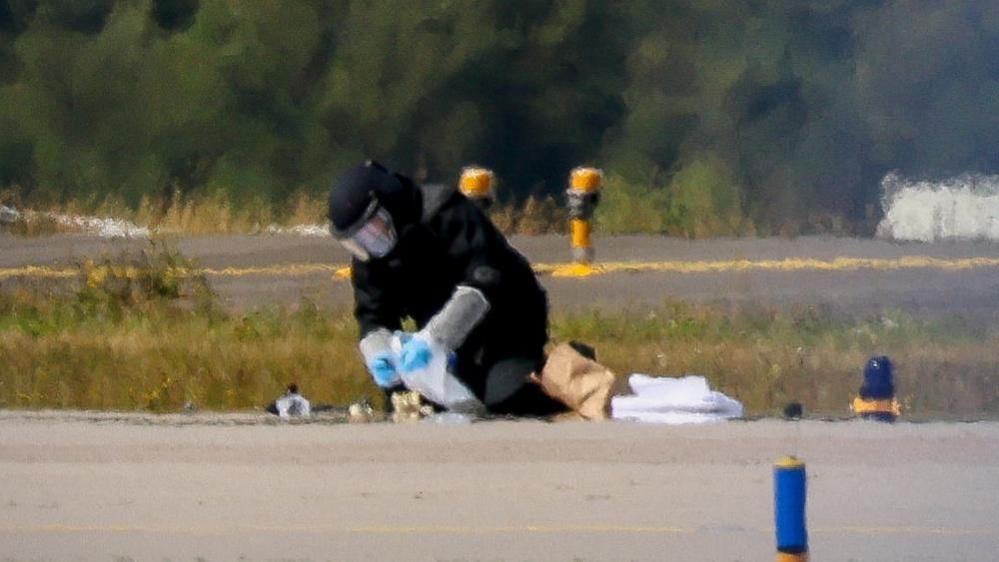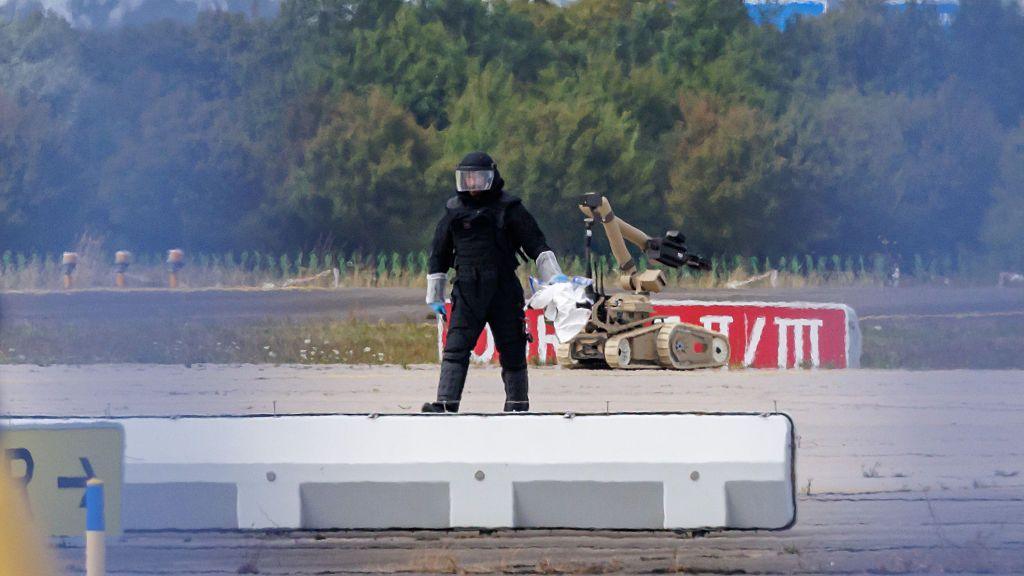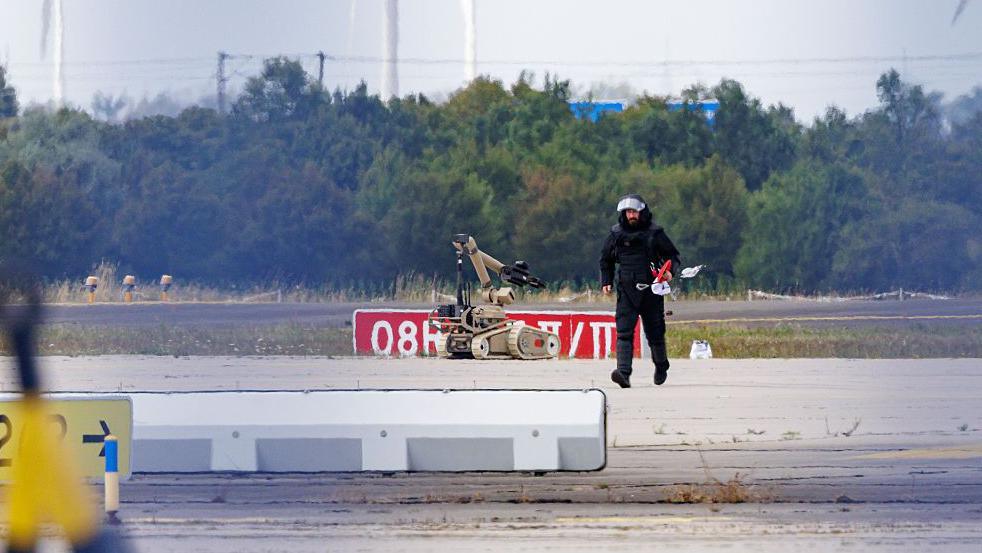
On the night of August 5, a small quadcopter carrying weapons and a potential bomb was found on the tarmac at Leipzig/Halle Airport in Germany. The device, once a target of a bomb‑disposal robot, forced the shutdown of one runway while investigators worked to determine its origin and purpose.
German officials warn that a foreign power may have been involved, with Russia a prime suspect amid its growing calendar of “hybrid” attacks. However, no evidence yet directly connects the drone to Moscow, which has denied any role.
News reports reveal a 2024 incident at the same airport in which a parcel containing an incendiary device sparked a fire at a DHL hub, and similar packages have ignited across Poland and the UK. Prosecutors in Lithuania and Poland have charged men with transporting explosives disguised inside food cans and headphone sets, implicating Russian‑linked proxies.
One defendant, Ukrainian Vladyslav D., described how he carried drone parts and RDX‑laden items along routes laid out by an alleged “Warrior” figure. He was paid over $2,000 in cryptocurrency for his cooperation.
Security analysts argue the drone’s presence at a major European airport signals a warning rather than a direct attack, aimed at unsettling Germany—a key supplier of military aid to Ukraine—and galvanizing NATO allies.
The incident is under tight scrutiny by NATO officials and aviation authorities worldwide, none of whom have confirmed whether the Ukrainian planes near the site were targeted. Meanwhile, Russian‑watchers suggest this is part of a broader strategy to deter support for Ukraine by any means, signalling a potential rise in similar hybrid assaults in the coming months.