
In brief
This article sheds light on the ongoing humanitarian emergency in Sudan, particularly the plight of children like Mahmoud, who have been displaced multiple times due to escalating conflict. With famine declared in certain regions, the struggle for basic necessities continues, while international aid efforts confront significant obstacles.
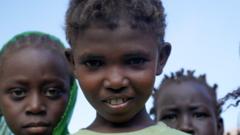
Many children in Sudan are enduring unimaginable hardships due to a heartbreaking humanitarian crisis that has resulted in over five million being displaced. Among them is Mahmoud, a spirited teenager who couldn't hide his wide smile, despite having lost his front teeth during playtime. Tragically, he is a twice-abandoned orphan, caught in the horrific consequences of a civil war that has turned the nation into a chaotic battleground.Sudan stands out as the world’s most severe humanitarian disaster, where dire hunger puts millions on the brink of starvation. The urgent need for assistance is underscored by the recent declaration of famine in certain areas. "It’s an invisible crisis," stated Tom Fletcher, the UN’s new humanitarian chief, who described the desperate situation facing half the Sudanese population—approximately 25 million—requiring immediate aid.In contrast to globally recognized crises in places like Ukraine and Gaza, Fletcher chose to highlight Sudan on his initial field mission to emphasize its needs. Most of the humanitarian workers supporting the efforts are Sudanese themselves, who have also lost their homes amid relentless fighting between government forces and the paramilitary Rapid Support Forces (RSF).During his visit, Fletcher met Mahmoud at a Maygoma orphanage in Kassala, where the ravages of war displaced nearly 100 children who used to live in Khartoum. The orphanage was caught in the crossfire in central Sudan as conflict erupted in April 2023, forcing these vulnerable children into a cycle of displacement.Twelve year-old Mahmoud expressed hope for the future, wishing to become governor one day to help rebuild what war has destroyed. For the 11 million displaced Sudanese, the most precious gift would be returning to their homes and beginning the long path toward recovery. Each day, however, securing food and basic sustenance remains a daunting challenge.Aid organizations, including the UN, are challenged to deliver necessary resources in the face of escalating violence. After high-level discussions in Port Sudan, army chief Gen Abdel Fattah al-Burhan announced on social media that he would permit the UN to set up more supply hubs and utilize additional airports for aid delivery. Some permissions are new, signifying potential progress in getting help to those most in need, including the Zamzam camp in Darfur, where famine conditions have been reported.Amidst these aspirations for change, the aid community struggles with criticism of the UN's relationship with Gen Burhan, who controls crucial checkpoints necessary for delivery operations. Fletcher clarified the need to engage with local authorities to navigate aid logistics, emphasizing the urgency of getting assistance and saving lives.Sudan’s dire conflict has also seen all warring factions accused of weaponizing starvation, complicating the situation further. Sexual violence, tragically described by the UN as an "epidemic," compounds the suffering, especially during the global campaign to end gender-based violence, known as "16 days of activism.”During the visit, Fletcher addressed a gathering of Sudanese women and children affected by the war and acknowledged the need for more significant local dedication to aid. "We really need help, but the major job should be from the Sudanese themselves," remarked Romissa, a local aid worker reflecting on her own harrowing experiences.In response to the war’s fallout, initiatives like Shamaa, or "Candle," emerged to provide refuge to abused women and orphans. Its founder, Mama Nour, herself a former resident of the Maygoma orphanage, voiced her desperation for external support in these challenging times, yearning for acknowledgment from the world outside of Sudan.As these resilient communities grapple with continuous adversities, their spirits flicker like candles in the darkness, illuminating the urgent need for humanitarian efforts to connect and uplift the forgotten souls of Sudan.

