In brief
Memorial events across Israel marked the third anniversary of the 7 October Hamas attack, where over a thousand Israelis were killed and hundreds taken hostage. Prime Minister Benjamin Netanyahu joined mourners but repelled calls for a Supreme Court‑led inquiry. Across the nation, protests with dyed fountains and blocked highways marched against perceived failures in national security, while international leaders, including Germany’s chancellor and the EU, expressed solidarity with victims.
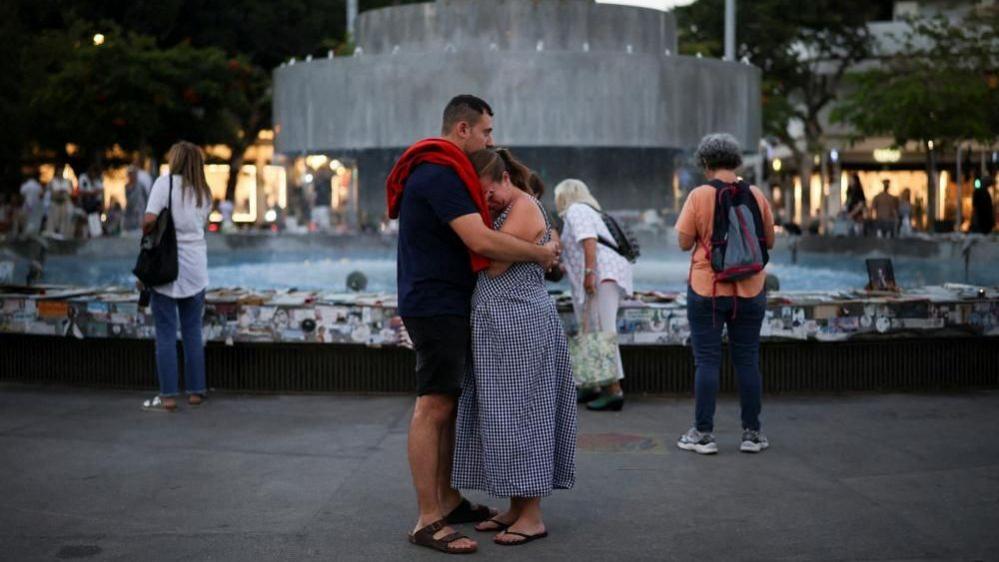
Israel remembers the day when 1,200 Israelis lost their lives in a Hamas‑led attack that broke open a war in Gaza. Across the capital and smaller cities the nation has gathered at memorial sites to pay tribute: lighted candles, flowers, and quiet moments of silence dominate the scene.
Prime Minister Benjamin Netanyahu arrived at Tel Aviv’s Yarkon Park to light a memorial candle for every victim of the October raid. He used the occasion to hurl a broad statement that the country would continue to "settle the score" with those responsible for the attack, avoiding the idea of a formal, independence‑led investigation.
Meanwhile, protestors took a more militant stance. At Dizengoff Square, the fountain’s water was dyed red to symbolize blood, while rubber lanes in the city were temporarily blocked to hold a moment of silence. Banners rose dramatically with slogans that sharply criticised the ruling government’s response.
Echoing the domestic grief, international leaders responded.
- German Chancellor Friedrich Merz called the attack a "profound rupture" and warned against rising antisemitism.
- European Commission President Ursula von der Leyen urged the EU to strengthen efforts toward a durable peace based on a two‑state solution.
- UK Prime Minister Andy Burnham pledged support to Britain’s Jewish community, affirming solidarity across national borders.
Clarifcation of the long‑running conflict can be found, however, in local stories. Families at the Nova festival site shared haunting memories of survivors who spoke of indiscriminate violence, and residents of Kfar Aza have not yet returned to homes still scarred by the assault. Through interviews with survivors, the narrative underlines a shared yearning for truth and justice, as critics argue that Israel has yet to conduct a comprehensive assessment of security shortcomings that allowed the attack to separate the nation in such a horrifying manner.
The march through the heart of Tel Aviv, combined with the collective silence in front of memorial candles, illustrates an enduring tug‑of‑war between remembering a tragedy and demanding accountability. As the global community watches, the debate over the path to reconciliation in the region continues to intensify.