In brief
Julie Inman Grant, the head of Australia's eSafety Commission, is at the forefront of the nation's efforts to curtail online dangers. Tasked with enforcing a ban on social media for Australians under 16, she faces threats and backlash while promoting child safety in the digital age. Critics worry about the implications of the ban, but Inman Grant pushes for innovative measures to protect children while preparing for future challenges like AI regulation.
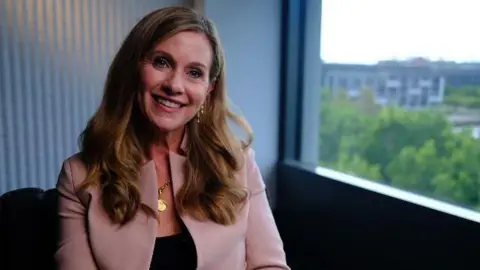
The interview with Julie Inman Grant is yet to start - she is not even in the room - when the conversation turns to the barrage of death and rape threats her office deals with on a weekly basis.The job of heading up Australia's eSafety Commission has put her squarely on the frontlines of internet battles - over fake news, censorship, trolling and children's safety.The online world can be a cesspit, a colleague admits, noting the vast majority of abuse lobbed their way is targeted at Inman Grant personally.Unfortunately, I've been living that reality for the past several years, the 57-year-old tells me herself a few minutes later, in her office overlooking Sydney Harbour.After decades spent working in the private tech industry, Inman Grant now finds herself on the other side: holding some of the world's most successful companies accountable as head of Australia's independent online safety regulator.It has arguably made her the country's most famous bureaucrat. But it's also made her a target.She was doxxed by neo-Nazi groups, has sparred publicly with Elon Musk and has even drawn the ire of some in the US Congress.All that while being tasked with implementing the country's pioneering social media ban on teenagers - or, in simpler words, kicking every Australian under the age of 16 off social media.Inman Grant's job has always been a high-stakes one but, with the world watching how Australia's social media experiment turns out, now more so than ever.Ten platforms come under the legislation, which came into force on 10 December, including Meta's Facebook and Instagram, as well as Snapchat and YouTube.Parents across Australia have widely supported the policy. For many, having the government on their side helps when they are at loggerheads with pre-teens desperate to get on to social media.But there are plenty of critics. Technology experts and child wellbeing advocates have voiced concern, saying children need to be educated, not banned from platforms.Many question the ban's enforceability and say it unfairly excludes minority groups such as rural kids, disabled teenagers and those who identify as LGBTQI+ - all of whom are more likely to find their communities online.Unsurprisingly, none of the companies are hugely supportive either. Across the board, they have said they share the government's concerns about online safety and will comply with the law, but don't think a ban is the way to go.Inman Grant argues anything that could help protect children online is worth trying.If we can delay [kids'] entry into social media for three years, and we can supplement that with digital action plans so that we're building their critical reasoning skills and resilience, then that's something that I think is worth exploring, she says.It's at this point she often likes to compare the digital world with the open water - a clever tactic, perhaps, to draw in Australians proud of their relationship with the ocean and their beautiful beaches.Just like with water safety, we have to continue teaching our kids to swim until they're strong swimmers, she says. We need to teach them about risks, like algorithmic rips. We need to teach them about predators in the water. It's sharks online, it's paedophiles and other scammers.But she's also used the water analogy to argue against a ban in the past.We do not fence the ocean or keep children entirely out of the water but we do create protected swimming environments that provide safeguards and teach important lessons from a young age, she said in June 2024, while the government was still weighing up the ban.I actually had to come around to it, she admits now. After pushing to be given freedom in how it was rolled out, she was persuaded. And her role has been central in shaping which companies will be included and how they must comply.She jokes her own home, which she shares with three children, including 13-year-old twins, has become a laboratory. I had one [child] that wasn't really fussed about the idea, but another who thought the sky was falling [in] that her Instagram and her Snapchat might be taken away.Johnathan Grant is optimistic. They're in the midst of figuring out who they are, building their identities, she says.I was able to screw up as a teenager and not have it filmed and amplified all over the place.The role is one that has since been championed by politicians of all stripes, in what many see as a testament to how Inman Grant has managed the office. And especially so in a period that has seen scrutiny on the internet safety watchdog grow dramatically, its budget quadruple, and its remit and staff expand exponentially.Inman Grant has become globally recognized for her efforts, even as she faces significant backlash for the social media ban. Nevertheless, she pushes forward, ready to tackle new challenges such as the fast-evolving landscape of artificial intelligence. The world can't afford to be late to regulate AI like it was with social media, she asserts.