
In brief
After a landslide win, Luiz Inácio Lula da Silva’s election speaks loud about Brazilian sovereignty and a rebuke of U.S. interference. His combative rhetoric earned him both a wary respect and a sharp rebuke from Donald Trump, who calls the outcome “rigged.” The shift threatens Trump’s ‘Donroe Doctrine,’ which had envisioned Brazil as a key ally under the new Bolsonarist president. As tensions over tariffs, technology, and diplomatic recognition simmer, Latin America's geopolitical balance could shift in Brazil’s hands.
Brazil’s re‑elected left‑wing president, Luiz Inácio Lula da Silva, shocked Washington with a pointed victory speech that denounced a purported U.S. role in Brazilian politics. “Brazil will not accept being anyone’s backyard” he declared, a line that reverberated across the Americas.
In a country where elections rarely hinge on foreign policy, Lula’s brash stance tapped into a patriotic backlash against what voters saw as pigeon‑hoarding by Washington. The speech, far from being a purely domestic message, became an effective campaign tool that resonated with thousands of Brazilians who regard Lula as a former union leader who has always stood up to powerful figures.
Why the U.S. reaction matters
Despite their public statements, the relations between the two leaders are complicated. Trump, who ignored the legitimacy of Bolsonaro’s then‑first‑round win, publicly praised “Lula” yet called the election “terrible” and “rigged.” Meanwhile, at the UN and later in the Oval Office, Trump characterised his talks with Lula as “very good,” signalling a tentative, if wary, rapprochement. A line Trump has found hard to reconcile with his own office’s “Donroe Doctrine” of Latin American influence.
Trump had been grooming the region for an anti‑narco, pro‑Washington coalition where Brazil would be the grand final piece. Lula’s re‑election thwarts that vision. The U.S. has already trimmed punitive tariffs that were imposed in response to Bolsonaro’s political turmoil, but the story is far from over. Brazil’s insistence on sovereignty—demonstrated through the blue “Brazil belongs to Brazilians” cap—has embarrassed the Bolsonaro family and has forced the United States to re‑evaluate the balance between trade, technology, and strategic influence.
Potential flash points still loom. Brazil has halted visas for U.S. State Department officials, accused Washington of undermining its electoral system, and denounced U.S. blitzes in Venezuela and on drug trafficking vessels. The U.S. also continues to feel threatened by Brazil’s growing digital payment infrastructure, Pix, and is concerned about Meta’s influence in the electoral process.
Even as diplomatic relations improve on paper, the lingering mistrust could flare if either side amplifies unilateral actions. The United Nations, the urgent problem of rare‑earth access, and the potential for shifting regional alliances all mean that the next four years will hold significant geopolitical gambles.
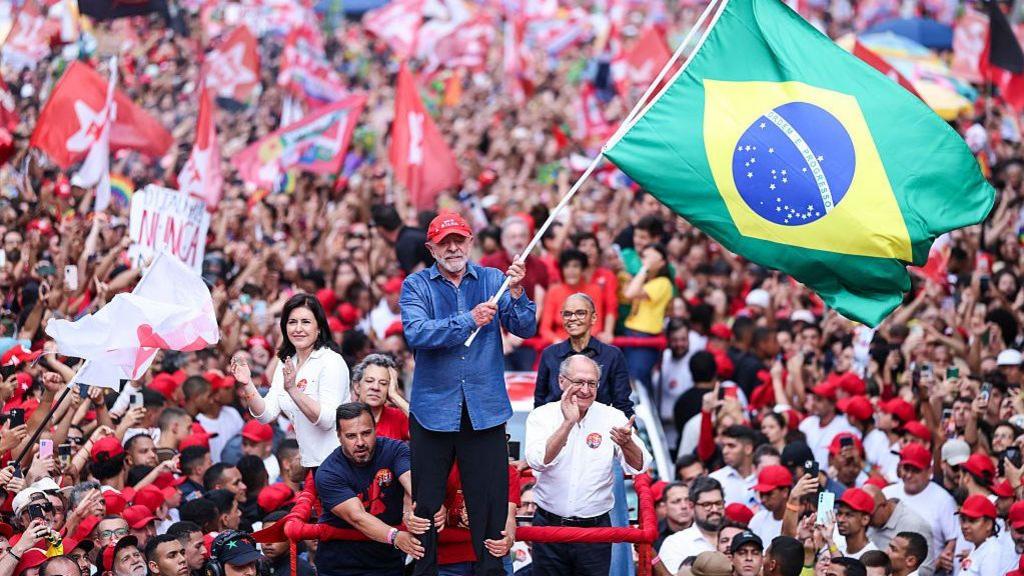
Caption: Lula waves the national flag during a rally in São Paulo, Oct. 24, 2026 – the day before the runoff election.
Watch: Fireworks after Lula’s victory in São Paulo (Published 2 days ago)

