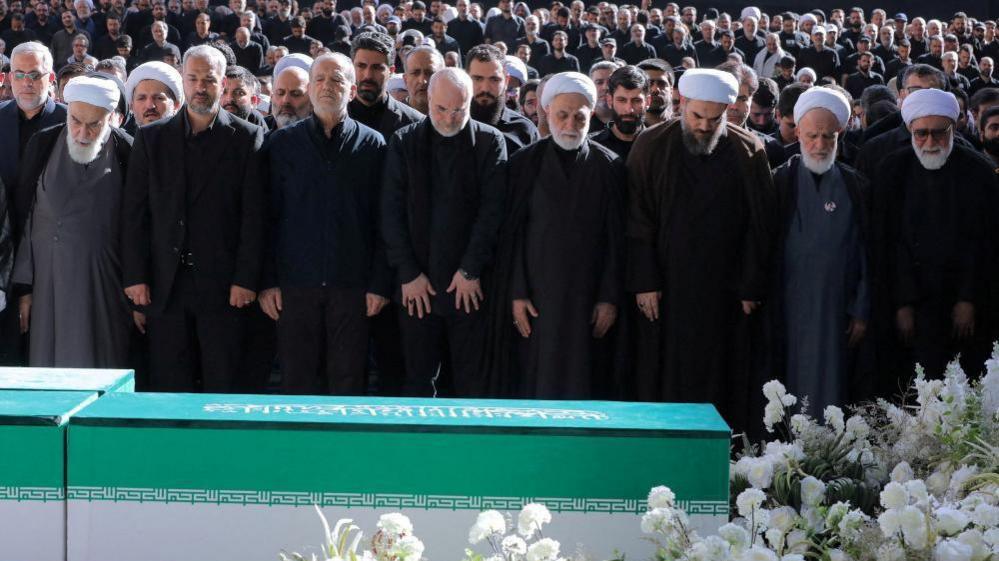
Iran’s former Supreme Leader Ali Khamenei was laid to rest in a state funeral that drew crowds of estimated 12‑20 million people across Tehran, Iraq and the holy city of Qom. Senior officials, including President Masoud Pezeshkian, Revolutionary Guard chief Ahmad Vahidi and the other three sons of Ali Khamenei – Masoud, Mostafa and Meysam – were in attendance on Sunday.
In a conspicuous absence, Mojtaba Khamenei, who has been out of the public eye since early March, was not among those present. Rumours circulated that he was wounded in the same US‑Israel air strikes that killed his father earlier this month.
The funeral began on Friday, with a full schedule of ceremonies across multiple venues. The coffin lies in state at Tehran’s Grand Mosalla, where recitations by 97‑year‑old cleric Jafar Sobhani accompany the mourning.
Sunday was declared a public holiday and the city’s temperature expected to hit the mid‑30s; mourners were sprayed with mist and medics carried an elderly woman away on a stretcher as safety measures were tightened. The funeral procession will continue through the capital on Monday, before the coffin is taken to Qom on Tuesday and a Shia site in Iraq on Wednesday, with burial slated for Thursday in Mashhad.
Amid the ceremonies, the fragile ceasefire between Iran and Israel remains in place, but both sides have warned they are ready to resume military action. Syrian and Iranian sources warned of threats from Israel to launch targeted assassinations against Mojtaba Khamenei. Protesters in Tehran also voiced hostility toward the US and Israel, with banners calling for "kill Trump" and "kill Bibi". Such slogans were amplified by poetry recitations that voiced anger toward the US.
Officials call the funeral the "funeral of the century", while the Associated Press and the Guardian report calls for the president of the United States to be killed. The Iranian public has, in contrast, shown sincere grief, telling reporters firm that they would not raise false tears about the fight for their country. The global community watches to see how the state funeral will shape Iran’s future and its relations with the West.