“Kablooey!”
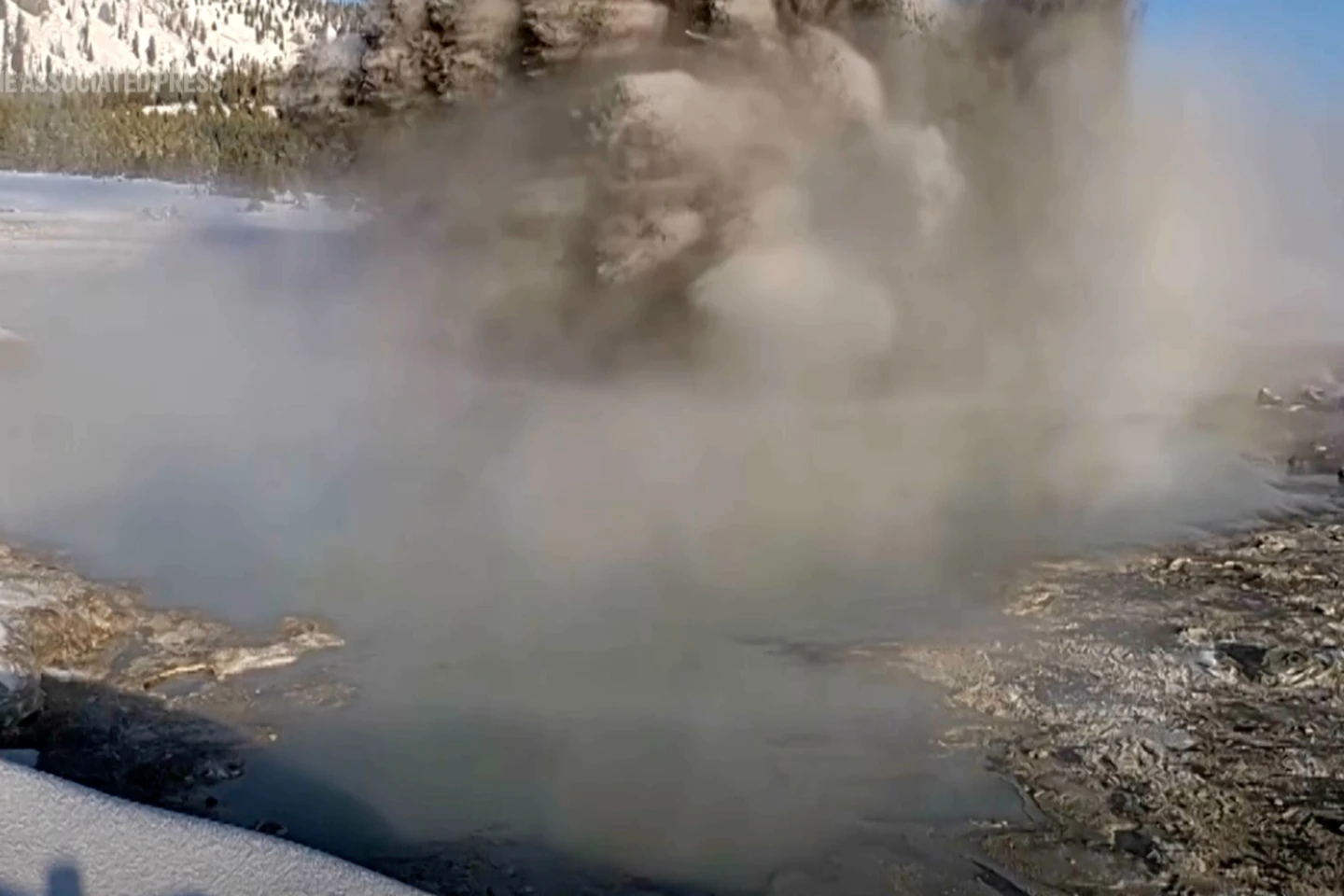
That’s the term U.S. Geological Survey (USGS) volcanic experts used to describe the muddy eruption at Black Diamond Pool in Yellowstone National Park that occurred on Saturday morning.
Footage shared on social media by the USGS depicted mud erupting from the pool shortly before 9:23 a.m. in Biscuit Basin, located between Old Faithful and Grand Prismatic.
Previous eruptions in the area have been largely audible rather than visible, often happening at night or when obscured by ice.
The Black Diamond Pool had already witnessed a significant hydrothermal explosion in July 2024, which propelled rocks and mud high into the air and led to the area being closed to visitors due to its potential hazards.
Since then, so-called dirty eruptions have sporadically reached heights of up to 40 feet (approximately 12 meters).
This summer, researchers have installed new cameras and enhanced seismic and acoustic monitoring equipment to better profile and understand these eruptions. They also utilize temperature sensors from the Yellowstone National Park Geology Program to help assess activity.
The Yellowstone Volcano Observatory webcam captured a clear view of the recent eruption, showcasing a muddy eruption against a backdrop of bright blue skies and snow, typical of winter in Yellowstone.
According to USGS Volcanoes, this eruption exemplifies the ongoing activity in the region over the past 19 months. However, experts stress that the eruptions demonstrate no consistent pattern or precursors, highlighting the unpredictability of Yellowstone's geothermal landscape.
Yellowstone is home to the world’s most extraordinary collection of geothermal features, with over 10,000 hydrothermal features, including more than 500 geysers.