In brief
Jodi, a 10‑foot mounted skeleton of a newly recognised dinosaur genus Nanotyrannus, will be auctioned in New York and could command as much as $9m. The sale follows the 2023 re‑classification of the specimen separate from the Tyrannosaurus rex and is the first such skeleton to come to market since that discovery. While some paleontologists see the sale as a risky precedent that could drive powerful collectors into the fossil trade, others argue that the money raised could help further research and public outreach. The auction highlights ongoing tension over whether scientifically valuable remains should remain in the public domain.
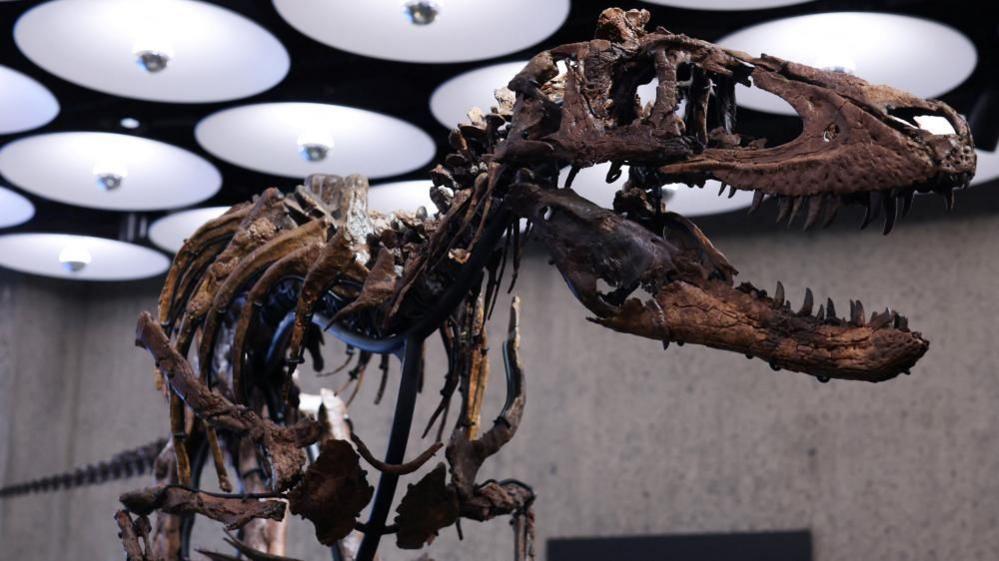
The mounted skeleton of a newly‑identified dinosaur, once thought to be a young Tyrannosaurus rex, will now go to auction in New York. Sotheby’s has set a starting bid of at least $6m (£4.5m) and a potential top price of $9m.
Nicknamed “Jodi”, the skeleton measures roughly 10 feet (3 metres) and includes about 191 fossil‑bone elements, including a remarkably well‑preserved skull. It is one of only three known complete specimens of the genus Nanotyrannus.
The sale comes a year after researchers from the United States confirmed that the specimen belongs to a distinct genus, separate from the iconic T. rex. That milestone followed a 2006 discovery of a “Dueling Dinosaurs” fossil where a Nanotyrannus and a Triceratops were found in apparent combat.
While the auction’s headline numbers reflect the rarity and scientific value of the skeleton, it has ignited an ethical debate in the paleontological community. Some experts argue that fossil sales to ultra‑wealthy collectors could set a precedent that drives valuable specimens out of public museums and research institutions.
Prof. Steve Brusatte of the University of Edinburgh cautioned that such sales might “disappear into the vaults of a collector rather than a museum.” He likened the risk to the Mona Lisa being privately held and inaccessible to the public.
Palaeontologist Megan Jenkins, who has worked on the Nanotyrannus specimen, acknowledged the commercial appeal but noted that, eventually, many high‑value fossils do end up displayed publicly. She added that the excavation of specimens is “a lot of time, effort and money.”
The auction underscores the tension between private investment and public access in the fossil market. Whether the skeleton will be bought by a private collector or a museum remains to be seen, but the sale will likely influence how future dinosaur fossils are handled and displayed across the world.