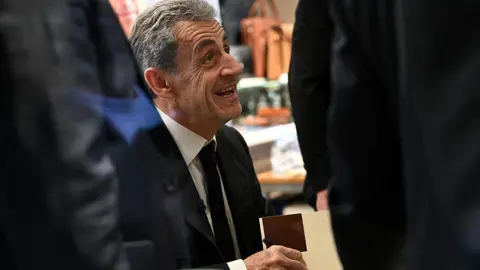
Nicolas Sarkozy, the former president of France, has recently published a memoir titled A Prisoner's Diary, detailing his tumultuous experience during his 20 days of imprisonment. The book presents an intimate glimpse into the life of a former head of state, forced to confront life behind bars, and it provides readers with an unfiltered look at the psychological and physical realities of incarceration.
In the memoir, Sarkozy describes his cell, measuring just 12 square meters, equipped with a bed, a desk, a fridge, a shower, and a television. He notes the oppressive reality of being confined to a space with limited resources, yet reflects on the cleanliness of the room, likening it to that of a low-budget hotel—a stark contrast to the prison’s reinforced door and the watchful eyes of guards. He reveals, One could almost have thought one was in a bottom-of-the-range hotel – were it not for the reinforced door with an eye-hole for the prison guards to look through.
After serving 20 days of a five-year sentence for his role in an election campaign funding scandal, Sarkozy was released from La Santé prison. His memoir reveals the emotional side of his incarceration, from sleepless nights interrupted by fellow inmates’ antics to the kindness shown by the prison staff, all of whom addressed him by his former title, 'Président.'
Choosing not to partake in daily yard walks, which he described as more like a cage than a place of promenade, Sarkozy opted to maintain his fitness on a running machine in the cramped sports room, which he referred to as a veritable oasis.\
Beyond the accounts of physical confinement, the book delves deeper into themes of fate, justice, and the political landscape. Sarkozy draws parallels to historical figures such as Alfred Dreyfus, claiming he is the target of a politically motivated judicial system. He staunchly denies the charges against him and explores the notion of being misjudged by the state. Reflecting on the political implications of his conviction, he also critiques current president Emmanuel Macron for failing to communicate his dismissal from the Legion of Honour.
Moreover, Sarkozy's relationships with other politicians, particularly with Marine Le Pen, have stirred interest. Acknowledging Le Pen's supportive comments post-conviction, Sarkozy expresses a newfound respect for her, signaling his political shift amid changing dynamics in French politics.
A Prisoner's Diary serves not only as a personal account of Sarkozy's incarceration but also as a commentary on contemporary political relations in France. As his book is met with intense media coverage, it captures the complexity of a leader grappling with his political legacy while navigating the realities of criminal justice.