
In brief
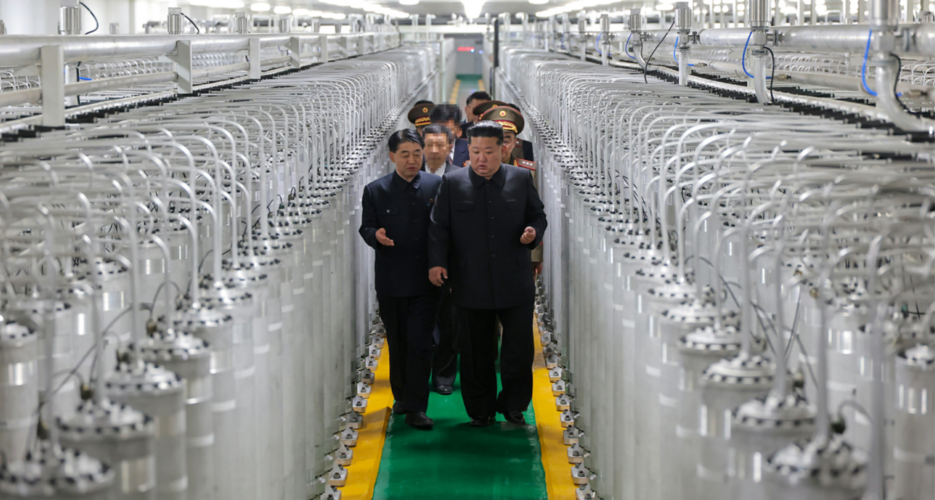
A two‑storey building at North Korea’s Yongbyon complex, capable of housing 28 centrifuge cascades, has been detected by the IAEA through satellite imagery. The expansion, announced in a report last month, underscores the country’s steady growth of sanctioned nuclear infrastructure despite the absence of inspectors since 2009. IAEA director Rafael Grossi condemned the development as a clear violation of UN Security Council resolutions. Earlier, Kim Jong Un visited the site in June, praising its “greatly expanded production capacity.” Recent reports also point to operations starting at an annex of the Kangson enrichment site, further deepening concealment. A South Korean proposal for talks on ending the war and halting nuclear advancement remains unanswered by Pyongyang.
The IAEA has detected a newly constructed two‑storey building at the Yongbyon nuclear complex. According to satellite imagery, the structure could house up to 28 centrifuge cascades, representing a significant step forward in the facility’s enrichment capacity.
Since the agency was expelled from North Korea in 2009, it has relied on remote sensing to assess the country’s nuclear activities. The latest report confirms an expansion that has been quietly underway for years.
“The continuation and further development of the DPRK’s nuclear programme are clear violations of relevant UN Security Council resolutions and are deeply regrettable,” IAEA Director Rafael Grossi said in a statement.
In June, the agency noted that Kim Jong Un visited a “newly inaugurated nuclear materials production factory,” identified as Yongbyon. Kim praised the site’s “greatly expanded production capacity” and suggested it would enable “larger plans.”
North Korea’s nuclear budget is staggering for a country among the world’s poorest. A 2022 think‑tank estimate puts annual spending at US$640 million.
Experts warn that many Korean facilities remain hidden. Dr. Edward Howell of the University of Oxford highlighted the difficulty of targeting sites like Kangson, where an annex was finished in 2024. Operations appear to have begun there in January, further blurring the lines between visible and concealed infrastructure.
South Korea’s President Lee Jae‑myung has proposed talks with Pyongyang to officially end the Korean war. He argues such discussions could pave the way for halting North’s nuclear progress. So far, the North has not replied to the invitation.
