
In brief
As childhood obesity rates soar globally, South Africa witnesses a significant increase among its youth. Schools such as the Kairos School of Inquiry are combating the trend by implementing healthy eating policies and encouraging parents to provide nutritious meals. With testimonies from students and local activists, this article highlights the challenges of unhealthy eating habits in a society increasingly influenced by fast food culture.
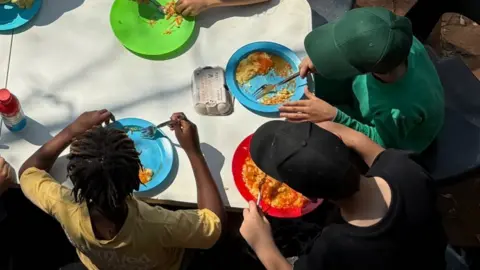
It's lunchtime in the leafy grounds of the Kairos School of Inquiry in Randburg, South Africa. Dozens of children line up excitedly in front of a table laden with large pots of fresh, hot food. 'Today on the menu we have Kitchari: a mix of daal and rice, with tomato chutney, halloumi and salad,' the school cook says, as she serves the students. The school decided to introduce a mainly vegetarian food policy to combat the alarming global trend where the number of overweight children has overtaken that of underweight ones. The UN indicates that the number of overweight and obese teenagers globally has nearly tripled in the last two decades, with overweight children aged five to nine increasing from 69 million to 147 million. At Kairos, parents are encouraged to pack only whole foods in their children's lunchboxes. Headteacher Marc Loon believes this initiative provides a vital opportunity to instill the importance of healthy eating in students. 'If all schools were to emulate our intention of being thoughtful and conscious of what children are putting into their bodies... the health of the children would be served,' he states.Despite these efforts, the rise of convenience food in the developing world significantly contributes to increasing obesity rates among children. Trainee lawyer Mamkhabela Mthembu shares her experience, stating that fast food, once considered a celebratory treat in her childhood, has grown into a lifestyle choice that has left her grappling with health issues. This mirrors a growing crisis where middle-income countries see soaring obesity rates as access to high-calorie junk food expands. In South Africa, the rapid rise of fast-food outlets—valued at $2.7 billion in 2018 and projected to reach $4.9 billion by 2026—has made healthy choices more challenging. UNICEF urges the government to restrict marketing unhealthy foods to children. It's a message echoed by parents like Memory Padi, whose daughter struggles with obesity partly due to weight gained from steroid treatments for a rare autoimmune disease. Despite efforts to maintain a healthy diet, challenges persist due to financial limitations and societal pressure. With 22% of children under five in South Africa being classified as overweight or obese, efforts continue not only at schools but also in community advocacy to foster healthier behavior among the youth. As the fight against childhood obesity evolves, it emphasizes the need for systemic changes in policies that can effectively reverse these troubling trends.

