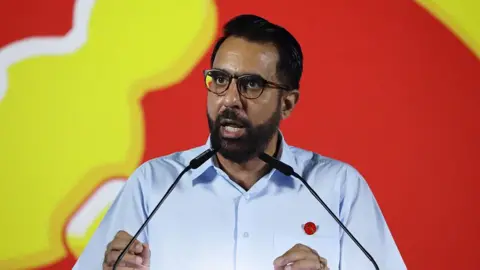
Pritam Singh, Singapore's Leader of the Opposition in parliament, has been stripped of his title by the prime minister following a vote conducted in parliament, which is overwhelmingly dominated by the ruling People's Action Party (PAP).
The decision comes after Singh’s recent conviction for lying under oath to a parliamentary committee, an assertion he continues to deny. He will still serve as a member of parliament and remain the secretary-general of the Workers' Party (WP), the largest opposition party; however, he will forfeit privileges formerly associated with his role including additional allowances and the right of first reply in parliamentary debates.
Singh's conviction is significant as it represents one of the few instances of criminal charges brought against an opposition lawmaker currently in office. His situation has highlighted long-standing accusations against the Singaporean government, where critics claim that the judiciary is used against political opponents.
During a parliamentary debate initiated by Indranee Rajah, the Leader of the House, Singh was criticized for undermining trust in the legislative process. Singh responded by asserting his integrity and noting that he disagreed with descriptions of his conduct as dishonourable.
After a lengthy debate, parliament voted to strip Singh of his title, with the majority of WP members opposing the motion. Prime Minister Wong articulated that Singh's conviction made it untenable for him to continue in his leadership role and invited the WP to propose a new candidate for the position.
In response to inquiries, Singh simply stated, '#WeContinue', signifying his intention to persist in his parliamentary duties. The Workers' Party has indicated that it will take time to consider the implications of this decision on the party and Singh's adherence to internal rules.
The controversy traces back to incidents in 2021 involving WP lawmaker Raeesah Khan and her later admission to providing false testimony. Singh was implicated during the investigations that followed, leading to a criminal case against him. Despite his appeal being denied, Singh has contended that he acted in good faith regarding the sensitive nature of the matter involving Khan.
As the situation unfolds, it remains to be seen how this will change the landscape of opposition within Singapore's political structure, particularly regarding the rights and treatment of its lawmakers.