In brief
Amid the escalating consequences of the government shutdown, an AP-NORC poll shows that 60% of Americans attribute significant blame to both President Trump and Republicans, while a slight majority also hold Democrats accountable. With rising public frustration, particularly evident among Democrats and independents, the impact is beginning to be felt at various levels, including delayed flights and missed paychecks for federal workers. As the standoff continues, the focus remains on current negotiations surrounding health care subsidies.
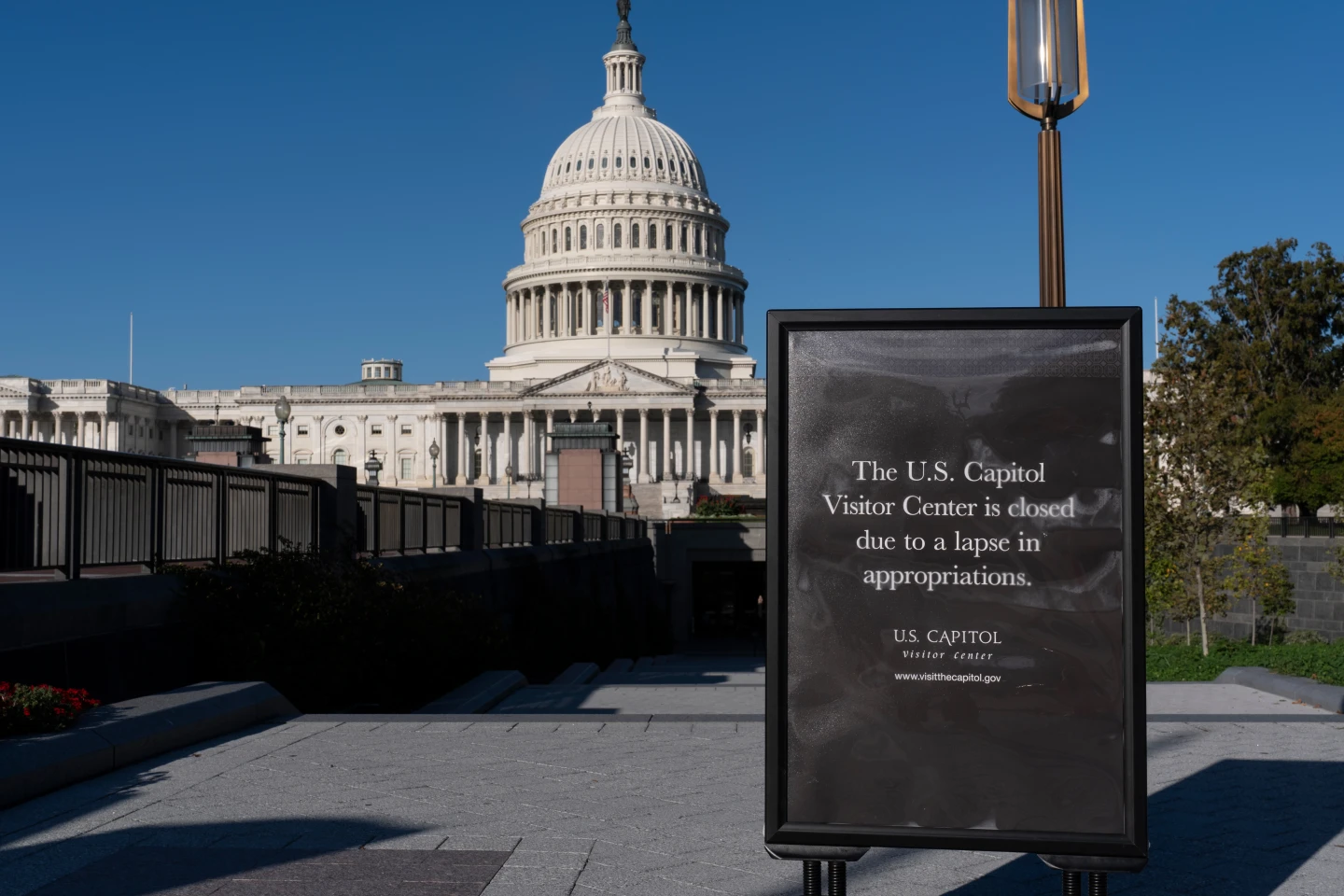
WASHINGTON (AP) — As the government shutdown drags on with no solution in sight, a new AP-NORC poll indicates that most Americans view it as a serious problem, with significant blame being directed at all major political players.
Approximately 60% of Americans believe that President Trump and Republicans in Congress bear a great deal or quite a bit of responsibility for the shutdown, while 54% attribute similar blame to Democrats in Congress. Overall, more than three-quarters of respondents indicate that each party deserves at least a moderate share of blame, reflecting a sentiment that no party is escaping the consequences of the standoff.
The poll, conducted as the shutdown extended into its third week, highlights increased urgency as leaders warn it could soon become the longest in U.S. history. Democrats are advocating for an extension of tax credits that aid health insurance affordability, while Republicans have refused to negotiate until legislation to reopen the government is passed.
This ongoing deadlock has transformed into a battle of narratives, with each party attempting to position itself favorably in the eyes of the public. With high stakes for Democrats, who are now out of power and facing pivotal midterm elections in 2026, they are urgently seeking issues around which to rally support.
The frustration among Americans has converged notably on the party in power, with nearly 50% of voters holding Trump accountable for the shutdown. This sentiment is echoed by various voices across the nation. Sophia Cole, a 38-year-old Republican mother from St. Louis, stated that both parties should collaborate on a solution while placing the ultimate responsibility on Trump's shoulders.
With the effects of the shutdown becoming tangibly felt, including travel delays and missed paychecks for hundreds of thousands of federal employees, the gravity of the situation is increasingly evident. The poll found that 54% of adults classify the shutdown as a major issue, with Democrats most likely (69%) to share this view. In contrast, only 37% of Republicans see it as a significant problem.
As negotiators continue discussions, the implications of this stalemate extend beyond immediate political fallout and raise concerns about the broader economic impact on the country.
Ultimately, the poll suggests that while feelings toward the shutdown are growing more intense, neither party has seen a substantial increase in favorability ratings. Currently, about 30% of U.S. adults view the Democratic Party favorably, while approximately 40% share a favorable view of the Republican Party.
With health care at the forefront of the negotiations, 40% of adults support extending ACA tax credits, although 42% remain undecided. Commencing with this legislative debate, the ongoing shutdown continues to highlight the need for a resolution that appeases the conflicting stances of both parties.