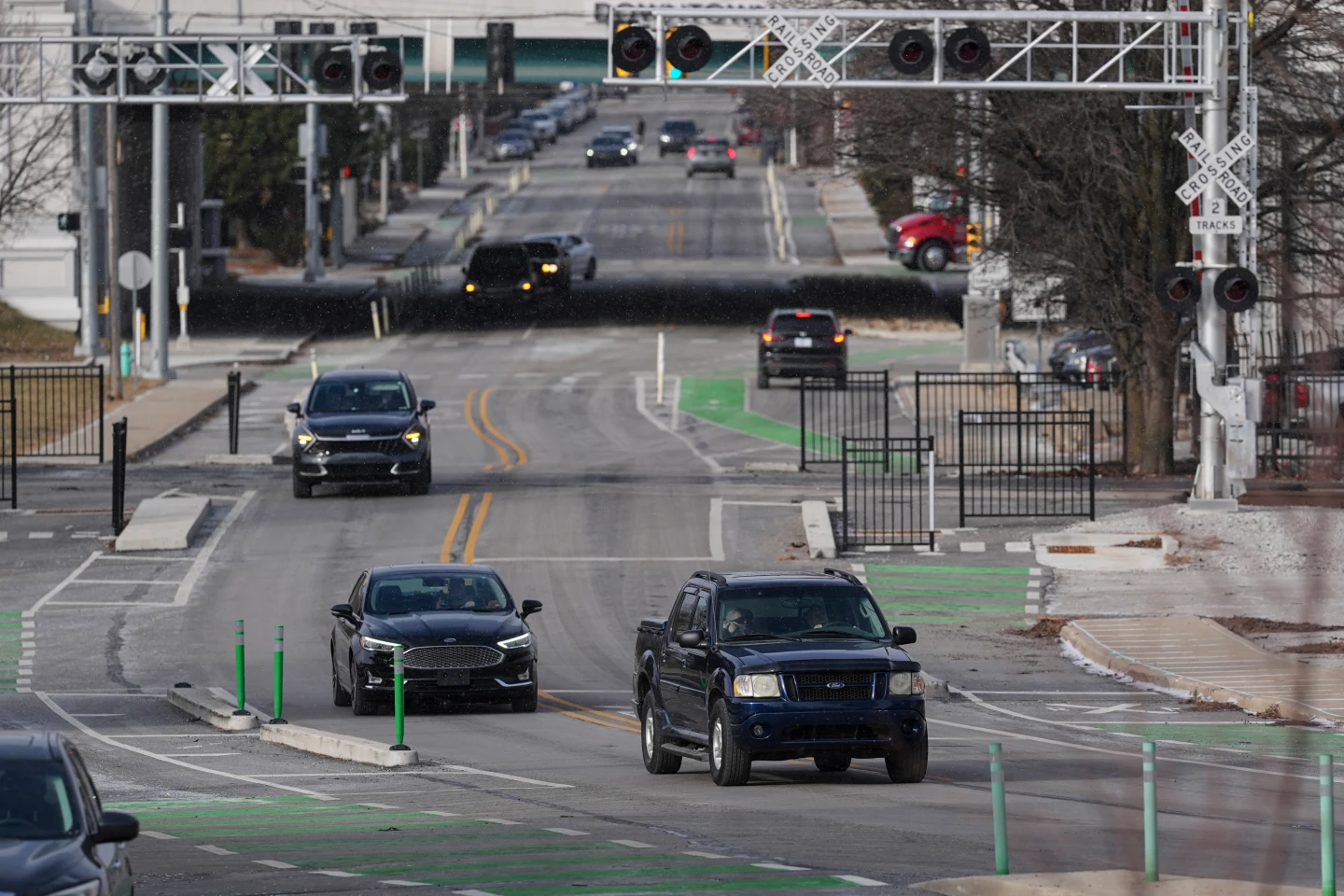
Excessive speeding on parallel one-way streets near a former electronics plant in Indianapolis had locals referring to them as a racetrack. Originally two-way streets, the change in the 1970s aimed to facilitate quick commutes for RCA workers. However, after the plant closed in 1995, the roads became a speedway for lead-footed drivers until they were recently converted back to two-way traffic.
James Taylor, director of a local community center, notes that this change has transformed perceptions of the area. As cities across the U.S. modernize their street designs, the conversion of one-way streets into two-way routes has emerged as a strategy to enhance safety and make downtowns more inviting.
According to transportation planners, primarily in midsize cities, reverting to two-way streets is viewed as one of the most effective means to improve traffic safety and attract shoppers and residents.
A Street Design U-Turn
Dave Amos, an assistant professor at California Polytechnic State University, points out that most major streets in the U.S. were initially designed as two-way. The shift towards one-way streets was primarily driven by suburban migration, which prioritized speedy car travel over pedestrian-friendly urban design. Amos asserts that while these streets are efficient for cars, they often render pedestrians vulnerable.
The belief that one-way streets are safer due to predictability for pedestrians is misleading, according to Wade Walker, an engineer. He explains that intersections that include both one-way and two-way streets complicate the flow of traffic, creating more potential conflicts for pedestrians.
Impacting Communities and Business
Louisville, Kentucky, is one city taking action by reinstating one-way streets to promote connectivity and enhance local businesses. The urban redesign projects focus on restoring streets that have historically divided neighborhoods and stunted economic growth. These changes aim to rekindle a vibrant community atmosphere that has faded over decades.
City officials in Indianapolis have ambitious plans for additional conversions, with an estimated $60 million budgeted for new projects. Local residents are beginning to share their thoughts on how these transformations will impact their community. Feedback has been mixed, as seen in cities like Austin, Texas and Chicago, where street redesigns have received both praise and criticism.
James Taylor reflects on the evolving landscape of his neighborhood, remarking that while the roads may feel familiar, they are seen from a new perspective. The long-term impact of these changes remains to be seen, but the goal of fostering community connection through urban design is clearer than ever.