

Somali referee denied entry to the United States, missing World Cup debut
Omar Artan, 34, became the first Somali to be listed by FIFA as a full referee when he secured a place on the 2026 World Cup roster. He travelled from Istanbul to Miami with a diplomatic passport and a single‑entry visa, only to be barred by U.S. immigration officials for a decade‑long visa review. The decision, announced in late June, left the former Mogadishu footballer stranded and effectively excluded him from officiating at the tournament that will run from July 10 to July 19.
The U.S. has maintained a travel ban list that includes Somali citizens since the Trump administration. In Artan’s case, border agents cited “vetting concerns” and references to the Al‑Shabab militant group as the basis for denying him access. The 11‑hour interrogation was reported in a New York Times interview where Artan described the experience as harrowing.
FIFA’s statement was straightforward: it does not intervene in host‑country visa processes, and the U.S. has control over who enters its borders. While the federation expressed pride in Artan’s professional achievements—he was named Africa’s top male official in 2024 and has overseen high‑profile continental fixtures—he was unable to participate in the training hub in Miami that is a prerequisite for all World Cup officials.
Artan’s career has been a milestone for Somali football. Beginning on neighborhood pitches in Mogadishu after a leg injury ended his playing days, he progressed through informal competitions before enrolling in FIFA’s referee development programme. In January 2024 he became the first Somali to referee an Africa Cup of Nations match, and in 2025 he officiated the African Champions League final’s second leg.
His omission from the 2026 roster is a significant blow to Somali representation. Six African referees will participate—hailing from Algeria, Egypt, Gabon, Mauritania, Morocco and South Africa—while the Somali nation will be left without a call‑up.
In response, Artan thanked FIFA, CAF and the football community for their support. He promised to maintain refereeing standards and hopes to return to future competitions.
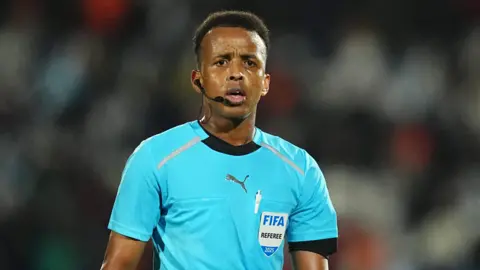
Getty Images: Omar Artan in action as a FIFA‑listed referee
The incident sparks debate over the fairness of visa restrictions for athletes and officials from conflict‑torn regions. While national security protocols are upheld by host governments, the blockage of dedicated experts like Artan raises questions about the objective of global sporting events such as the World Cup—renowned for inclusivity and global solidarity.
Somalia’s government has expressed deep sorrow over the circumstances, and the diplomatic conversation continues as the nation seeks to secure better access for its sporting talent in future tournaments.

