In brief
In recent days, tens of thousands of migrants from Morocco swam across the Strait of Gibraltar to reach Spain’s enclave of Ceuta, prompting Spain to deploy troops to its southern border. The chaos that unfolded saw at least fifteen people drown, and local officials accused human‑trafficking networks of exploiting the makeshift routes. A Supreme Court ruling this month now bars the rapid expulsion of migrants stranded at sea, while Spain’s interior ministry vows to reinforce the Civil Guard and maintain security. The incident has reignited tensions with Italy, which has warned of potential Schengen‑border adjustments and highlighted the fragile security situation at Europe’s lone land border with Africa.
Spain has deployed troops to the northern African enclave of Ceuta after a sudden surge of migrants from Morocco poured across the Strait of Gibraltar, a move that has raised alarm both locally and across Europe.
On Thursday, thousands of people swam around a jetty that marks the border and entered Spanish territory, with at least fifteen lost at sea. Local officials said the sudden influx overwhelmed the enclave’s capacity to process arrivals, with emergency services and beaches littered with rubber rings and aquatic gear. The chaos comes in the wake of a Supreme Court ruling this month that migrants stranded at sea who seek to reach Ceuta or Melilla can no longer be summarily repatriated to Morocco.
Spain’s interior ministry accused human‑trafficking networks of exploiting the situation to “encourage flows of undocumented migrants.” In response, the ministry announced that the armed forces would reinforce the Civil Guard in Ceuta and, where necessary, “maintain security in the city.”
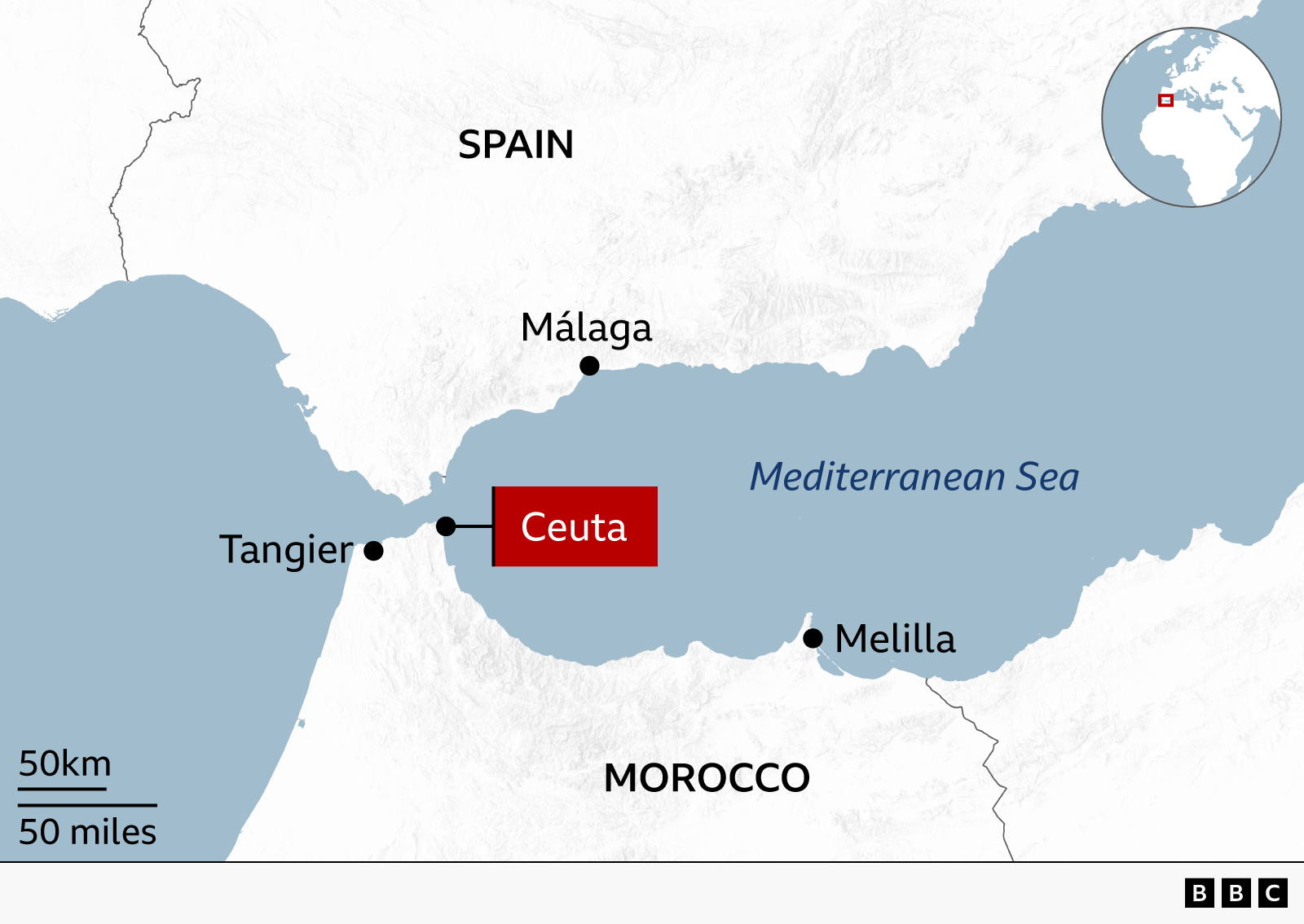
Ceuta sits on Morocco’s north coast, separated from mainland Spain by the Strait of Gibraltar. Since its founding it has been a focal point for migrants who see it as a foothold on the European mainland. Over the past decade Spain has increased surveillance, reinforced barriers and worked closely with Moroccan authorities to try to curb illegal crossings—yet the demand persists.
The crisis prompted Italy’s government to say it was “considering extraordinary measures,” including a pause to the open border Schengen agreement with Spain. Prime Minister Giorgia Meloni said the images from Ceuta were “striking” and that uncontrolled illegal immigration poses a concrete threat to Europe’s borders, echoing comments from foreign minister Antonio Tajani. Spain’s foreign minister Jose Luis Albares rebuked these remarks, calling them “improper” and “partisan demagoguery.”
The Schengen area permits open borders among 29 European countries, but both Ceuta and Melilla represent the EU’s only land border with Africa, making security challenges unique. While authorities are scrambling to increase patrols and fences, the underlying drivers—trafficking, economic hardship, and fragile institutional cooperation—continue to fuel the movement of thousands across this dangerous route.