In brief
Naan, a soft leavened flatbread, has a rich history that traces back to ancient Persia. Originally a luxury item in Islamic courts, it has evolved into a popular comfort food paired with various dishes across the globe. This article discusses naan's journey, from its origins and significance in South Asian cuisine to its contemporary adaptations that cater to diverse tastes.
A pillowy-soft naan - a leavened flatbread popular in South Asia - paired with rich, creamy butter chicken gravy is one of the most popular comfort foods in the region, and it's also one of the most popular Indian dishes abroad.
And while the tangy, aromatic gravy is often considered the show stealer, it would lose much of its charm in the absence of its understated partner.
The naan's chewiness adds texture to every bite; its subtle flavour complements the gravy's spices and seasonings. In fact, the versatile naan diligently props up whatever it is paired with, allowing the main dish to shine.
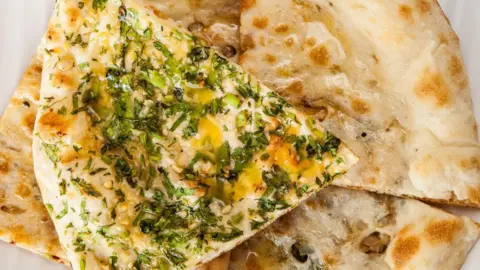
That's probably why this flatbread has become one of the most popular breads in the world. Recently, butter garlic naan - a flavour-packed rendition of the traditional naan - topped Taste Atlas' best breads list.
It is made by brushing butter onto a piping hot naan and sprinkling a generous amount of chopped garlic on it. Also on the list was aloo naan - made by stuffing the naan with potatoes seasoned with spices and coriander.
While today naans and its versions have become ubiquitous in restaurants serving Indian or Middle Eastern fare, they were once served only in the courts of Islamic kings. So, how did the naan travel from royal kitchens to our plates?
The origins of the naan are murky but many food historians believe that the flatbread originated in ancient Persia, since it derives its name from the Persian word for bread. The Persians used water and flour to make the bread, which was most-likely baked on hot pebbles.
The naan travelled to the Indian subcontinent with the Sultans who ruled large parts of the subcontinent between the 13th and 16th Centuries. The Muslim rulers brought with them culinary traditions that spoke of their Western and Central Asian roots, which included using a tandoor (clay oven) to cook food.
During the Delhi Sultanate, naans were usually enjoyed with different meat preparations, like kebabs (meat grilled on skewers over charcoal) and keema (minced meat).
Cooks in the royal kitchens advanced the art of naan-making by introducing specialized kneading techniques and adding yeast - a rare ingredient at the time - to make the bread softer and fluffier.
This remained the norm during the reign of subsequent Mughal emperors as well, which stretched over the next three centuries.
During British rule, the naan remained a food item enjoyed by the elite, but it also travelled to the West. Back in India, the naan weaved its way into colonial cuisine, paired with cured meats or sauces infused with local spices.
Today, naan is made by combing flour, yogurt and yeast and kneading them into a soft dough, which is left to rise before being baked in a very hot tandoor.
In the 1990s and 2000s, the naan saw a fresh wave of innovations as restaurants began experimenting with the flatbread. From pork vindaloo naan to truffle cheese naan, cuisines have found a new canvas.
The naan is India's glorious culinary gift to the world that signifies a rich, shared history and culture, showcasing plurality and cross-cultural identities co-existing in harmony.