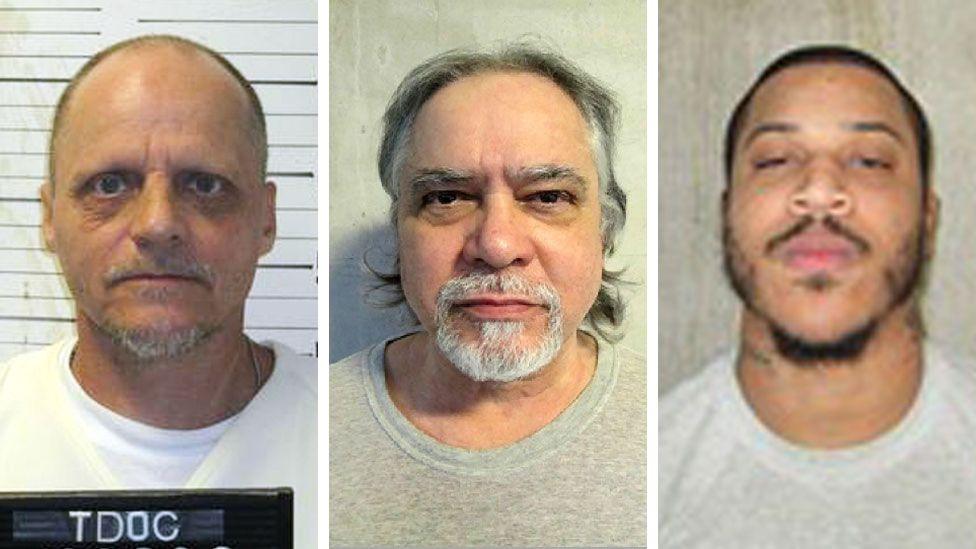
Three men will be executed on Thursday, marking the first time in 16 years that a trio of death‑row inmates will die on the same day in the United States.
Anthony Darrell Hines, 66, will be executed in Tennessee after a botched injection in 2023; Jeremy Williams, 41, convicted of the murder‑rape of a 5‑year‑old in Alabama, also faces lethal injection; Carlos Cuesta‑Rodriguez, 71, who killed a woman in 2003, will die in Oklahoma.
The scheduled executions are part of a 4‑fold increase in death‑row cases and executions in 2025 compared with 2021, a trend tied to Donald Trump’s return of the federal death penalty and the aggressive outlawing of chronic states to national capital punishment law.
In 2020, Trump ended a 19‑year federal parole‑penalty moratorium with 13 executions in six months. Yet no federal executions have taken place since President Biden’s 2023 reversal, while state orders continue to bring the death penalty to various jurisdictions.
Florida has been a major contributor, with an estimated 40% of all US executions in 2025 and 63% by mid‑2026. Governor Ron DeSantis has championed changes that reduce juror requirements and broaden capital crimes to include sexual battery on under‑12 minors, creating a more conducive environment for death sentences.
The rise in executions coincides with a decline in national public support—only 52% of Americans find the death penalty morally acceptable’s Gallup poll—while juries have issued fewer than 20 death sentences in 2025. The statistical shift signals a broader skepticism toward capital punishment and its fairness.
Executing three inmates in the same week also highlights logistical issues: the pandemic caused lethal‑injection drug shortages, leading to dangerous alternatives such as firing squads in some states. A 2022 investigation by the Death Penalty Information Center found 3% of executions performed between 1890 and 2010 were botched; lethal injection had the highest failure rate.
The Tennessee government’s failed attempt to inject former death‑row inmate Tony Von Carruthers resulted in a prolonged, painful episode, a scene echoed by current execution protocols. Legal arguments argue the failure was due to IV access rather than deliberate mercy, while Governor Bill Lee has denied that it was a botched act.
On a broader level, the executions reflect the tension between conservative and liberal values in the US, with some states like Florida adopting stricter penalties and others, such as Pennsylvania, clearing backlogged cases without carrying out executions. The debate includes issues of discrimination, cost, and the question of humanity’s willingness to murder on a state‑mandated scale.