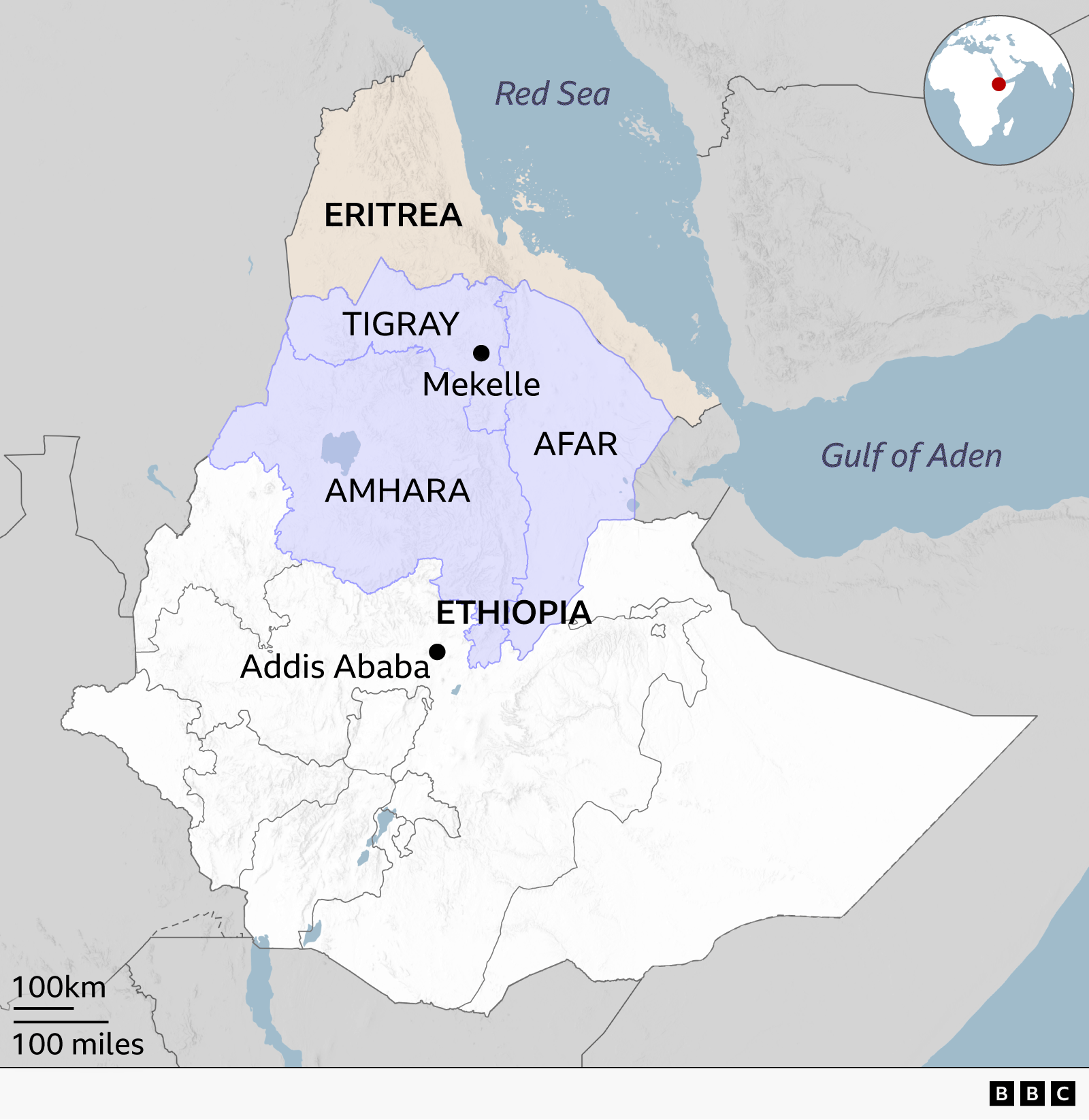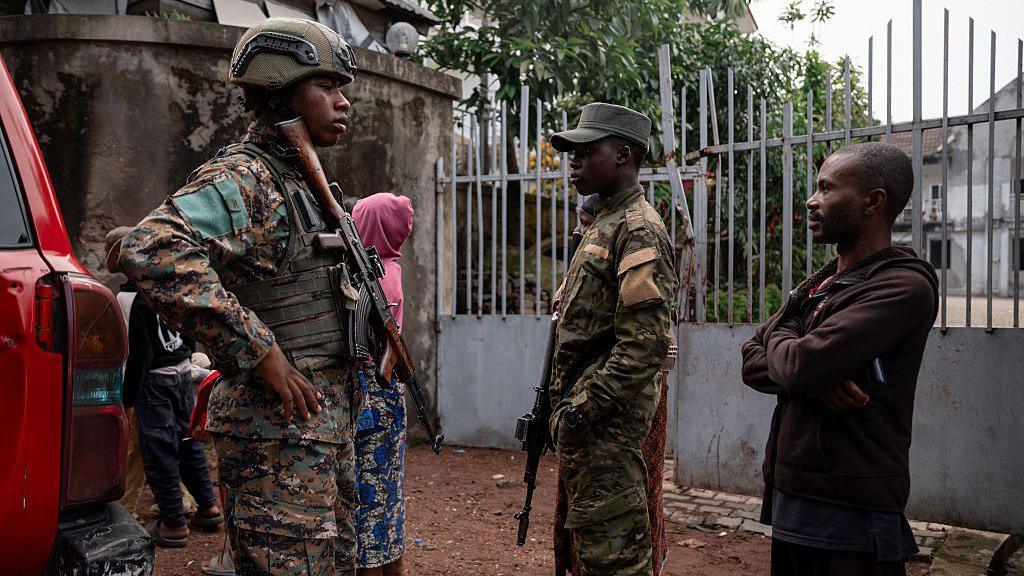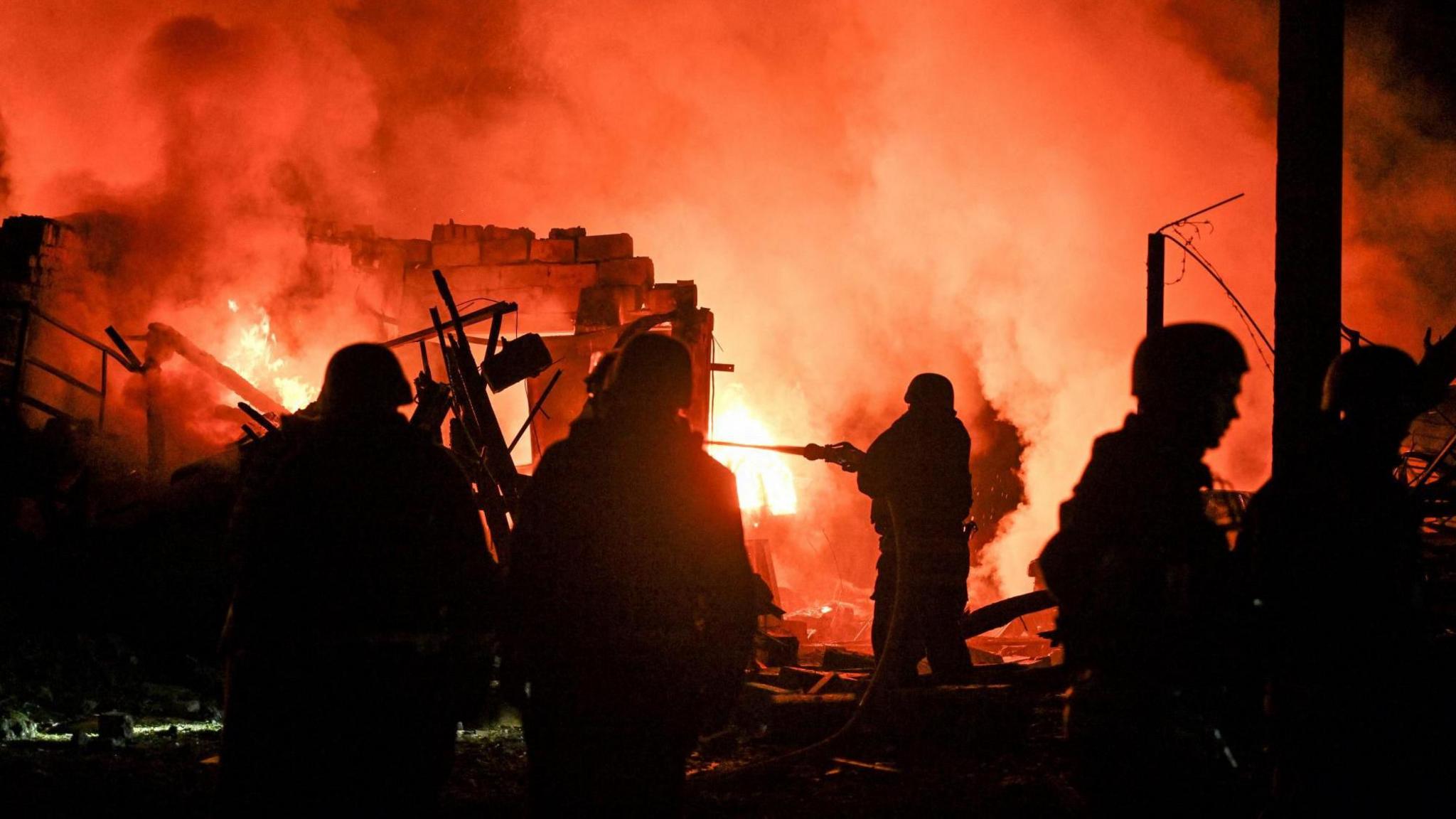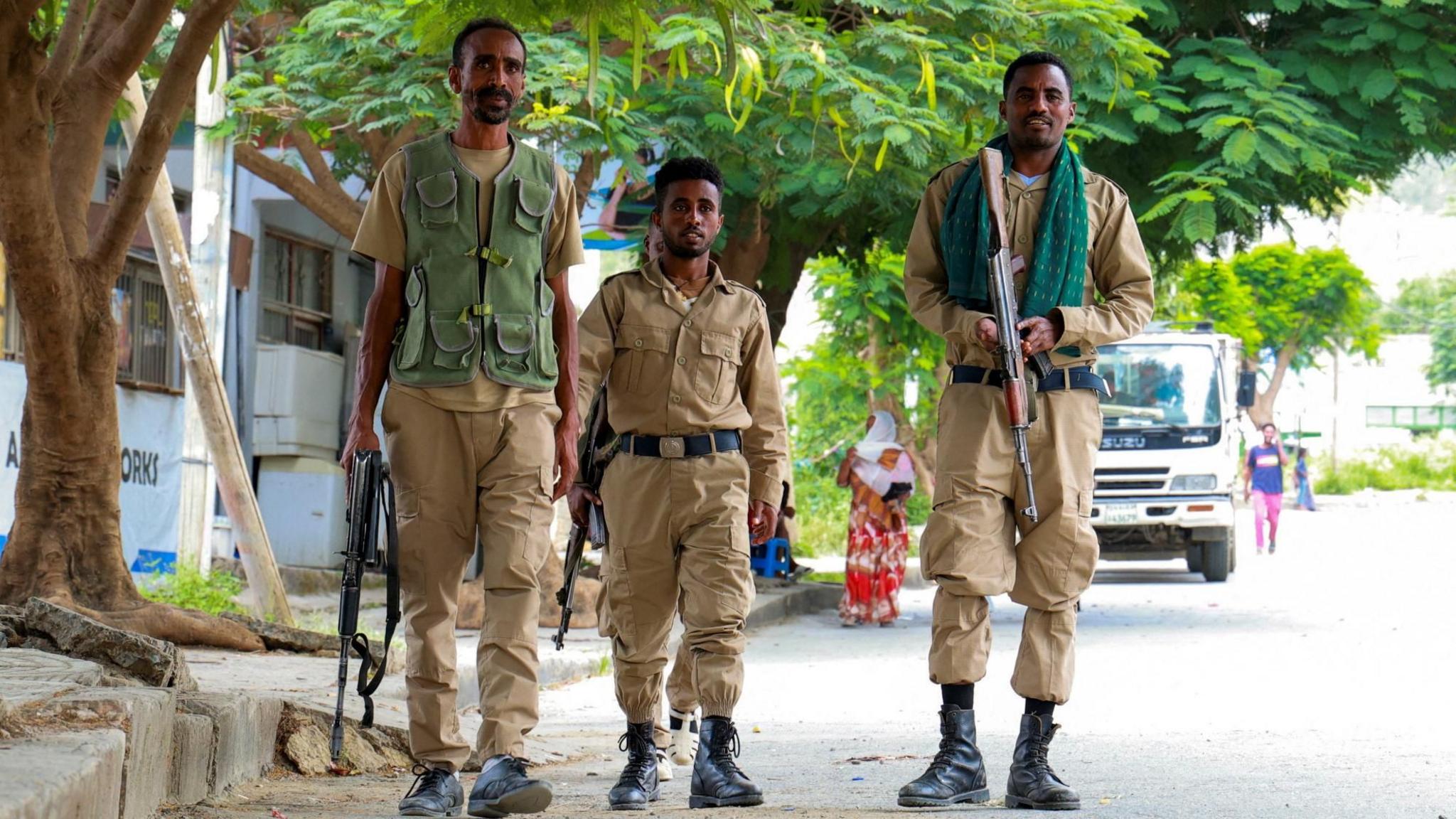
Fighting has erupted in Ethiopia’s northern region of Tigray between regional forces and the national army.
Residents who have been mourning the two‑year war that ended in 2022 now fear a full‑scale conflict will return. Panic buying has begun as calls and internet services are disrupted, making it hard to access money in a largely cash‑less society after ATMs stopped working several months ago.
The escalation follows more than six months of deteriorating relations between the federal government and the Tigray People’s Liberation Front (TPLF), the party that has governed the region for decades. The Pretoria Agreement, brokered by the African Union, ended hostilities in late 2022 but left several core disputes unresolved.
Both sides blame the other for the recent clashes, with the TPLF saying it is fighting back a federal offensive that included drone strikes, while the government claims Tigrayan forces first seized control of regional airports.
Key points under dispute include control of western Tigray, an area the Amhara region currently holds. Many Amharas believe the land was never rightfully part of Tigray, while the TPLF demands the territory return to its borders and a referendum for displaced people to return. Civil servants are now unpaid, and essential services have collapsed, escalating economic hardship.
In addition, the TPLF asserts it has only handed over old weaponry to the AU and continues to amass arms that the government alleges are hidden. Attempts by Prime Minister Abiy Ahmed to influence Tigrayan governance led the TPLF to restore its pre‑war administration, further deepening mistrust.
A recent development is the formation of the Alliance for Survival, an umbrella of six armed movements including Amhara’s Fano militia and the Oromo Liberation Army. These groups share a common aim: to topple Abiy’s Prosperity Party, despite their divergent grievances.
The government has criticised the new alliance as a destabilising force and accused Eritrea of backing Ethiopia’s internal opposition, a claim denied by Asmara. The relationship between Ethiopia and Eritrea remains tense, with Ethiopia pressing for control over Eritrea’s southern port of Assab.
Against this backdrop, the African Union leads diplomatic efforts, calling for an immediate cessation of hostilities and urging former Nigerian President Olusegun Obasanjo to mediate. The UN and Igad have also appealed for a return to dialogue.
However, the low trust between Addis Ababa and Tigray and the complexity of the newly formed armed coalition make a swift resolution uncertain. The conflict has already spilled into neighbouring Afar and Amhara regions, raising fears of a wider civil war that could involve Eritrea and other regional powers.
Source: BBC Africa