
In brief
In Somalia, growing demand for illegal alcohol drives men like Guled Diriye and Dahir Barre into the perilous world of smuggling from Ethiopia. They navigate dangerous roads ruled by armed groups and checkpoints, risking death while confronting the harsh realities of poverty.
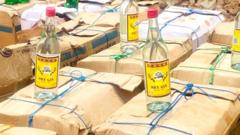
Amid the chaos of Mogadishu, the capital of Somalia, 29-year-old Guled Diriye sits wearily in a colonial-era villa, his sandals caked in the vibrant orange dust of the arid landscape. Exhausted from a recent trip transporting smuggled alcohol across the perilous roads from Ethiopia, Diriye reflects on his dangerous foray into this illicit trade—one that he pursued to provide for his family amidst dire economic conditions. Somalia's strict adherence to Sharia law renders the sale and consumption of alcohol illegal. However, the demand for alcohol persists, particularly among the youth, pushing desperate individuals like Diriye into the smuggling trade. His journey into this world began with a neighbor, Abshir, who introduced him to smuggling after Diriye’s career as a minibus driver crumbled under the competition from growing numbers of rickshaws. Diriye explains that his venture into smuggling involved discreetly picking up boxes of alcohol from designated drop points and delivering them across the capital. "I didn’t realize it at first but this was my introduction into smuggling. Poverty overrides legality," he laments. The journey begins in small border towns, with alcohol sourced from Ethiopia. Diriye mentions towns like Abudwak and Galdogob as pivotal hubs for the trafficking of this illicit product, despite tribal elders raising concerns over alcohol-related violence. With armed groups and criminal gangs enforcing their own versions of law, a life of risk and uncertainty accompanies every trip—death constantly looming over smugglers. Diriye drives through a gauntlet of checkpoints, maneuvering past various clan militias. He narrates a harrowing experience of a violent ambush where his last loader was killed in an attack—an encounter that still haunts him. This dangerous path is fraught not just with the threat of armed conflict but also with the remnants of past wars, such as landmines. His colleague Dahir Barre, 41, echoes similar sentiments, expressing a bleak humor about their dangerous profession that he has embraced since 2015. With limited opportunities and crushing poverty surrounding them, Barre's journey led him away from hotel security work with meager pay to the dangerous roads of smuggling. Barre recalls the heightened risks of smuggling during earlier years when al-Shabab's influence was stronger, leading to violent encounters and severe consequences if caught with contraband. While caught smugglers may face severe penalties from al-Shabab, other armed groups are sometimes negotiable with bribes. The route to Mogadishu spans seven to nine arduous days, culminating at a prearranged drop-off point where locals take over the chain of smuggling. For Diriye, the memory of his initial entrance into the trade remains raw. His neighbor, the one who initially introduced him to smuggling, eventually turned to religion and opted out after losing a family member to the unforgiving world of illegal trade. Ultimately, the danger is met with an unwavering realism by smugglers. Diriye professes, “Death is predestined. I can’t let fear deter me from making a living. Sometimes, I want to quit, but the reality of poverty is inescapable." Each man’s story underscores a deeper narrative of survival in a country grappling with immense challenges, forcing them into a shadowy world where life—and choices—are dictated by necessity.
