In brief
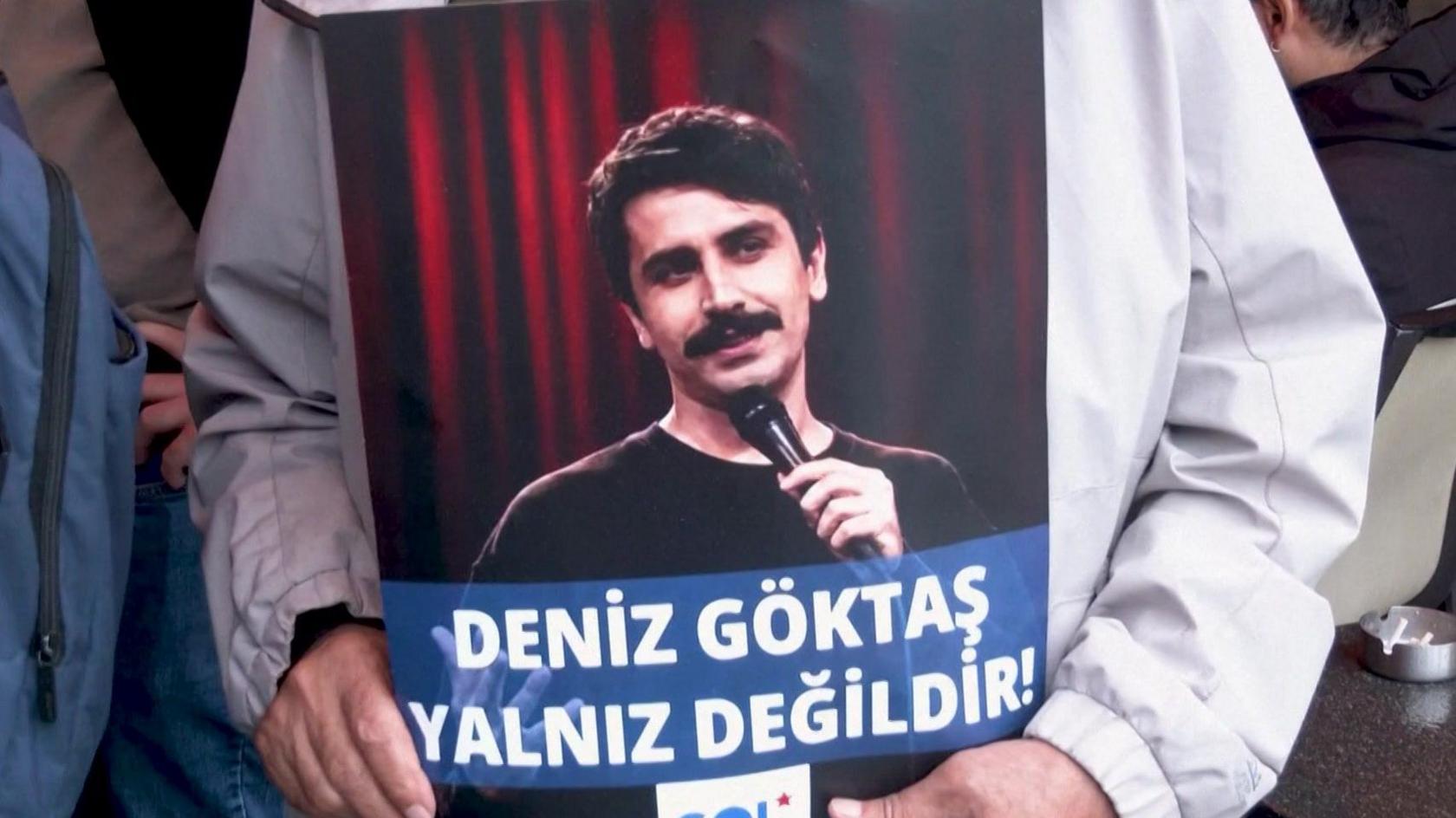
Deniz Göktaş, a popular stand‑up comic, was convicted by an Istanbul court for insulting President Recep Tayyip Erdoğan and handed a near‑two‑year sentence. Prosecutors had sought up to 12 years, but the court ordered his immediate release because he had already spent almost three months in pre‑trial detention. A travel ban was imposed, preventing him from leaving Turkey while a final appeal decision remains pending. The case highlights the state’s crackdown on dissent amid a wave of arrests of journalists, human rights activists and opposition politicians. Supporters gathered outside the courthouse, celebrating the verdict and calling for broader freedom of expression.
An Istanbul court convicted popular stand‑up comic Deniz Göktaş of insulting President Recep Tayyip Erdoğan and imposed a sentence of 18 months, yet ordered his immediate release due to time already served.
The 39‑year‑old comedian, who had spent 88 days in solitary confinement, was found guilty after prosecutors singled out a line in which he called Erdoğan a "shy dictator." Göktaş insisted the remark was a political characterisation, not criminal. He rejected the charges, but the court did not accept his defence.
While the sentence will be upheld pending a final appeal, a travel ban now bars Göktaş from leaving Turkey, signalling the regime’s intent to curb dissent most visible in the cultural sphere.
His release to a cheering crowd outside the prison facility has been hailed as a triumph by fellow comedians and supporters, who view the verdict as a rare acknowledgement of freedom of expression in a climate of widespread censorship.
Nevertheless, prisoners of opinion still populate Turkish jails—journalists, activists, LGBTQ advocates and even the mayor of Istanbul, Ekrem Imamoglu, who himself was recently arrested. Human rights groups warn that the state’s heavy‑handed tactics stifle democratic dialogue and that the difference between “inside” and “outside” remains blurred for many.
Göktaş expressed relief at reuniting with family and urged for a time when all Turkey’s citizens could enjoy liberty. "I hope the day comes when we can all regain our freedom together," he said.