
In brief
In a renewed showdown, the U.S. Central Command said it hit the tanker Belma en route to Iran’s Kharg Island, after President Trump reimposed a blockade over alleged Iranian attacks. The strike follows a period when Washington had lifted sanctions and allowed a temporary oil license, only to tighten them again. Analysts estimate Iran exported at least 74 million barrels during the brief pause. The move is part of a broader strategy to curb Iranian influence amid a fragile ceasefire.
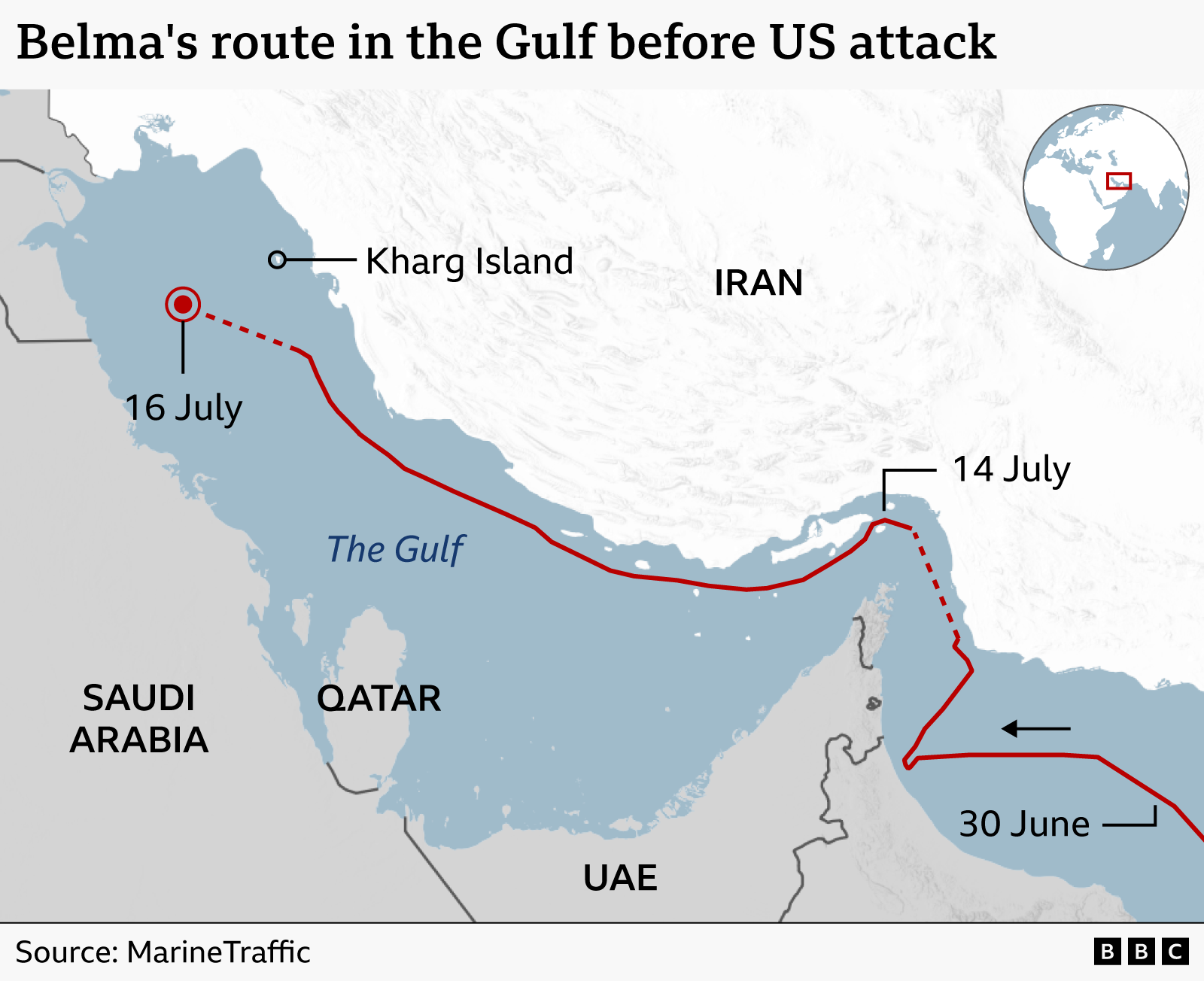
On Wednesday, U.S. Central Command announced that it had targeted the oil tanker Belma with Hellfire missiles as the vessel approached Iran’s Kharg‑Island oil terminal. The strike came after President Donald Trump reinstated a naval blockade of Iranian ports, citing a series of Iranian attacks on commercial ships in the Strait of Hormuz.
According to the U.S., the tanker ignored multiple warnings and headed eastward toward Kharg Island. The missile attack disabled the ship’s smokestack and rendered it inoperable.
The blockade had been in effect from mid‑April to mid‑June, during which the United States redirected over 140 vessels and disabled nine ships. It was lifted on 17 June as part of a ceasefire agreement that also removed key sanctions on Iranian oil and issued a temporary license for U.S. dollars to pay Tehran.
Analysts from United Against Nuclear Iran and TankerTrackers.com estimate that Iran exported at least 74 million barrels of oil during the brief pause in sanctions, worth an estimated $6 billion. The U.S. last week tightened the licence after Iranian forces attacked several shipping vessels near the Strait of Hormuz.
MarineTraffic data shows the Belma entered the Gulf on Tuesday after passing through the Strait of Hormuz. It had no cargo on board and was last recorded 100 km southeast of Kharg Island on Thursday. An additional tanker, Fuyao, turned back to Iranian waters, possibly in response to U.S. enforcement.


