In brief
In a significant shift, Romania's defense ministry has confirmed that the US is set to reduce its troop presence on NATO's eastern flank, with numbers dropping from 1,700 to between 900 and 1,000. This decision, attributed to changing priorities under the Trump administration, has sparked concerns about security in Eastern Europe as nations fear potential Russian aggression. However, the Pentagon reassured allies that the reduction does not reflect a decreased commitment to NATO or its collective defense principles. Meanwhile, the US maintains a robust military presence across Europe.
Romania's defence ministry has said the US intends to reduce some of its troops stationed on Nato's eastern flank.
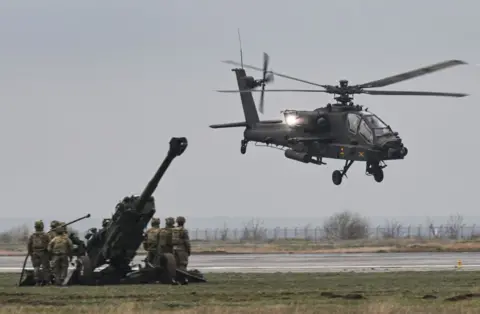
Between 900 and 1,000 American troops will remain in Romania, Bucharest said - down from 1,700.
The ministry said the decision was expected and that the resizing of US forces was a result of the new priorities of the Trump presidential administration.
The Pentagon said the decision did not constitute a withdrawal from Europe or a signal of lessened commitment to Nato and Article 5.
Article 5 holds that Nato members will come to the defence of an ally which comes under attack, and has long been seen as the main deterrent against potential Russian aggression.
Defence Minister Ionut Mosteanu stated that his US counterpart Pete Hegseth had recently conveyed to the Europeans that they needed to pay more attention to their own defence and that the US was shifting its attention towards the Indo-Pacific region.
One US brigade at the Mihai Kogalniceanu airbase - set to be Nato's largest in Europe - would be rotated out and not replaced, Mosteanu said.
The brigade has elements in Bulgaria, Romania, Slovakia and Hungary, Mosteanu said, although it was unclear whether US troops were going to be pulled out of these countries too.
Polish Defence Minister Wladyslaw Kosiniak-Kamysz said on Wednesday that Warsaw had no information about a possible reduction of US troops on its territory.
The presence of US troops at Romania's Deveselu and Campia Turzii bases would remain unchanged, Ionut Mosteanu added.
Since taking office in January US President Donald Trump has made no secret of his wish to shift the focus of US military commitment from Europe to the Indo-Pacific region, and has repeatedly urged European Nato members to take more responsibility for the continent's defence.
But the announcement of the US troop withdrawal from Romania will be concerning for Eastern European countries, many of which feel they have reason to fear a Russian attack in the future.
Shortly after the announcement from Bucharest, a Nato official stressed that Washington's commitment to the Nato alliance remained clear and adjustments were not unusual.
Even with this adjustment, the US force posture in Europe remains larger than it has been for many years, with many more US forces on the continent than before 2022, the official said in a statement.
The Pentagon also stressed that the US maintained a robust presence throughout Europe as well as the ability to array forces and capabilities to meet objectives... including President Trump's commitment to defend Nato allies.
The US has more than 100,000 military personnel deployed in Europe, according to figures from late last year.
Last month Nato announced the creation of a mission dubbed Eastern Sentry, which it said would enhance the alliance's vigilance along the entire eastern flank.
The decision came after a dozen Russian drones entered Polish airspace, in the most serious incident of its kind since the war began in February 2022. Days later, Romania reported that a Russian drone had breached its airspace, and Estonia said Russian warplanes had violated its airspace too.