
In brief
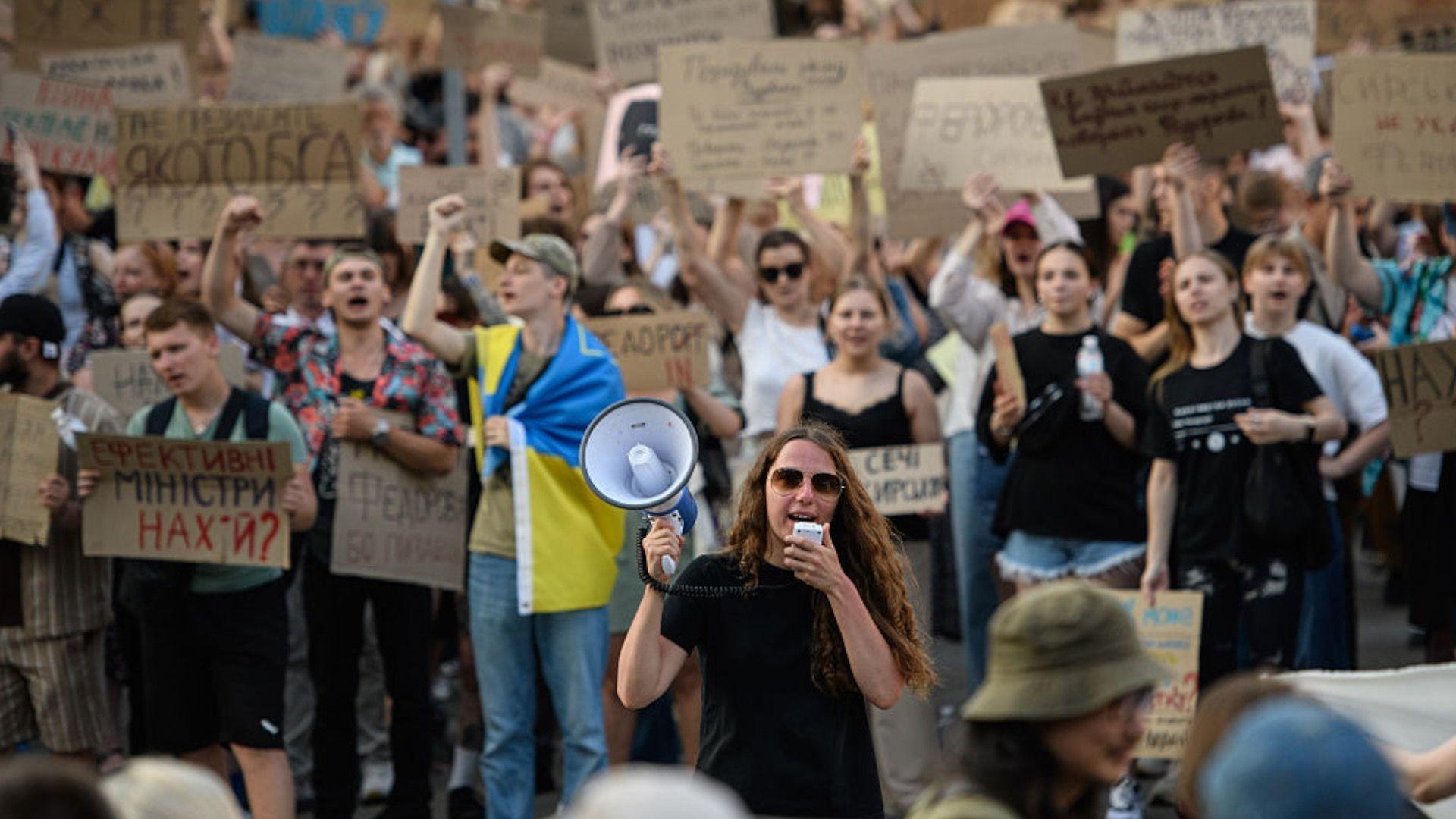
President Volodymyr Zelenskiy’s cabinet reshuffle last week saw the dismissal of defence minister Mykhailo Fedorov, igniting anger among Ukraine’s frontline troops and the public alike. Soldiers describe the move as a slap to their morale and an official setback for the technological advances that Fedorov pioneered. Protestors marched in Kyiv with cardboard placards, while wounded veterans warned that the new political climate could jeopardise Ukraine’s military gains amid the ongoing war. The clash between Fedorov’s progressive vision and General Oleksandr Syrskyi’s traditional approach reflects deeper tensions within Ukraine’s armed forces. Observers fear that the abrupt leadership change could slow Ukraine’s innovative defence strategy just as Russian forces plan renewed assaults.
Last Thursday the capital of Kyiv swelled with citizens and soldiers drawn to the street after President Volodymyr Zelenskiy announced that defence minister Mykhailo Fedorov would not be re‑appointed. The decision, announced during a cabinet reshuffle, has been described by frontline troops as a slap to the heart of the army and a blow to Ukraine’s rapidly evolving digital warfare strategy.
“I hope when I wake up after the anaesthetic, Fedorov will be back at the Ministry of Defence,” an unnamed soldier posted in a short video on Telegram. “Otherwise, everything I was fighting for will have been in vain.” His words echo the sentiment of many wounded veterans who see the policy shift as a sudden undoing of years of progress.
While protests have turned to cardboard placards in the city, soldiers on the front lines have experienced a different kind of pressure. According to a veteran named Natasha, “Yesterday our positions here got hit by MLRS, so nobody cared about Fedorov or the cardboard signs.” The contrast highlights the divide between the experiences of Kiev’s civilian life and the soldiers’ frontline reality.
Fedorov, who was first appointed defence minister in January, has been credited with turning Ukraine’s war‑fighting force into a “modernised” one. He pushed for aggressive drone initiatives, like the popular “Army of Drones: Bonus” scheme that rewarded units for engagements against Russian forces, and pressed hard for the blockade of Russian access to Starlink satellite internet, painting a serious strategic disadvantage for the opposition.
The move also exposed a long‑standing rift between Fedorov and Major General Oleksandr Syrskyi, the commander‑in‑chief of the Ukrainian armed forces. Some soldiers refer to Syrskyi as “The Butcher” or “General 200” – a nickname that mutters Soviet legacy disdain – while others regard him as a necessary but outdated corner of the command structure. Stupak notes that Fedorov’s vision for digital innovation is “destroyed” by a regime that prefers a Soviet‑era military bureaucracy.
Critics argue that Putin‑led forces could take advantage of the leadership vacuum as winter approaches. Human rights groups are also wary that removing a reform‑driven officer may dampen the morale of the troops who have already endured fierce battles. The protest at the Ministry of Defence, however, carried a clear message: the army’s future depends on the continuity of the technologically oriented policies that Fedorov championed.
Amid the protests, the president’s decision to appoint interim minister Yevhenii Khmara, the head of the Security Service of Ukraine, was met with scrutiny. While support for Zelenskiy’s reforms in the anti‑corruption sector had recently resurfaced, observers warn that the stakes are higher this time—its outcome could directly affect Ukraine’s war capability.
The call from soldiers and citizenry alike underscores the fragility of Ukraine’s political‑military balance. The political fallout from this cabinet change will likely reverberate across the entire defence apparatus as the war enters its most decisive phases of winter. The outcome may determine whether Ukraine can sustain the digital edge it built in recent months or whether it will revert to traditional, less flexible tactics.
